


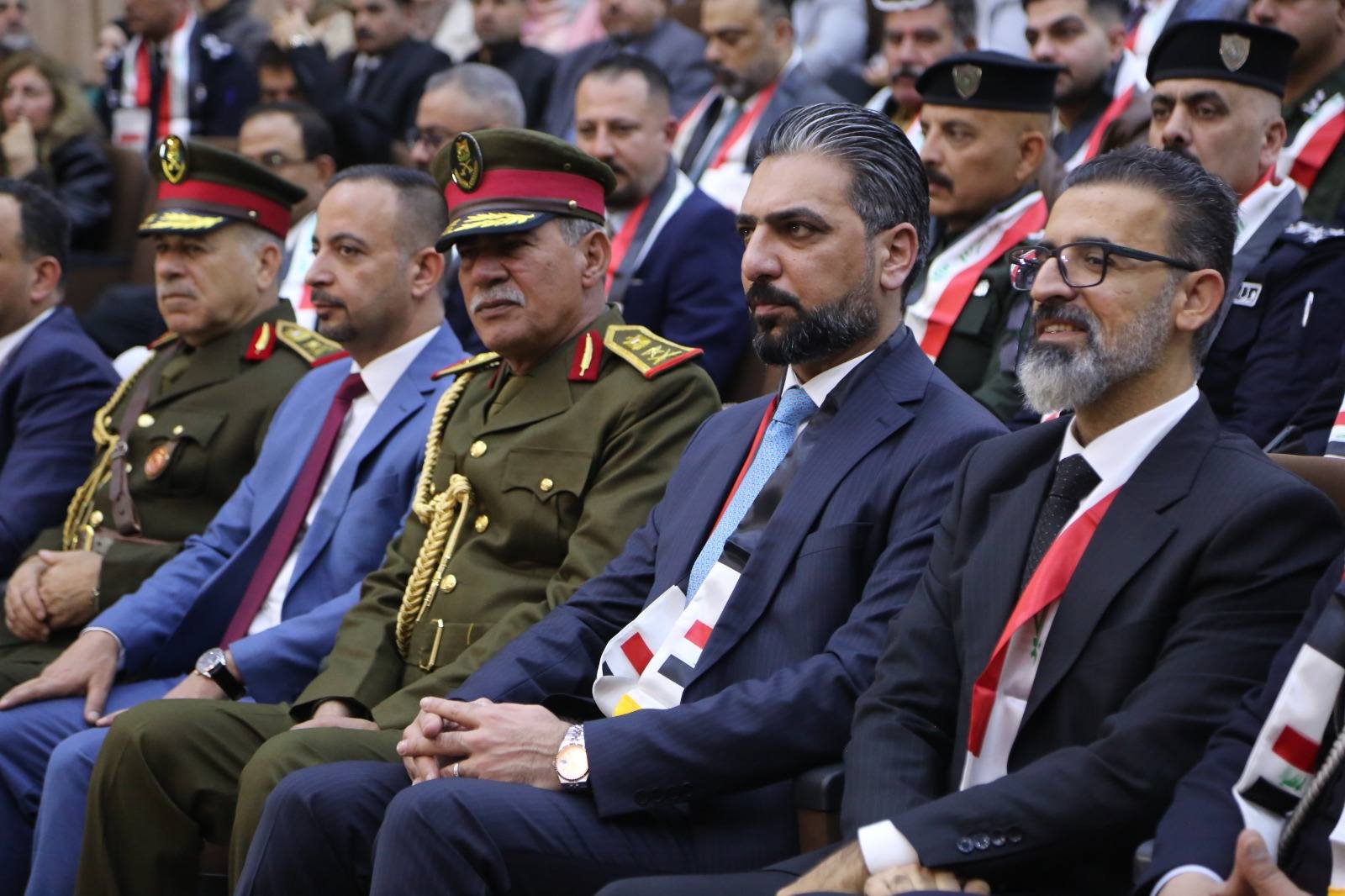

The Progress Party considers the issue of reclaiming the Kirkuk governorship part of a broader political package tied to the formation of Iraq’s federal government. At the same time, the Iraqi Turkmen Front ITF continues lobbying in Baghdad for the rotation of the position, despite the matter not being explicitly included in the al-Rashid Hotel Agreement.
Rebwar Taha became governor through an agreement among three political groups—the Patriotic Union of Kurdistan (PUK), the Progress Party led by Mohammed al-Halbousi, and the Babylon Movement—which together control nine of the 16 seats on the Kirkuk Provincial Council. The deal, finalized in Baghdad in August 2024 and known as the al-Rashid Hotel Agreement, stipulates that the governorship would remain with the Kurdish side until December 31, 2025. It would then transfer to the Turkmen beginning December 1, 2026, followed by the Arab component.
Dhahir Anwar, an Arab member of the Kirkuk Provincial Council, explained to KirkukNow that the agreement is backed by several prominent political figures, including Asa'ib Ahl al-Haq Secretary-General Qais al-Khazali. Under the arrangement, both the Kurdish and Arab communities would hold the governorship for one year and eight months each, while the Turkmen would assume the role for six months. The rotation framework also applies to the position of Provincial Council chairman, which is currently held by a member of the Progress Party.
Raad al-Salih, a council member representing the Progress Party and the Arab community in Kirkuk, stated that the structure and rotation of the local government are governed by a series of interconnected political agreements. He noted that the same parties involved in forming Kirkuk’s administration are influential in Baghdad, linking local arrangements—including the governorship—to broader federal positions such as the Iraqi presidency.
The scheduled rotation was delayed, according to al-Salih, due to overlapping political developments. These included parliamentary elections, the formation of the federal government, disputes over selecting a presidential candidate, and missed constitutional deadlines. “The broader Iraqi political process as experiencing confusion but once the federal government is finalized, previously agreed-upon arrangements—including those concerning Kirkuk—will be reinstated.”
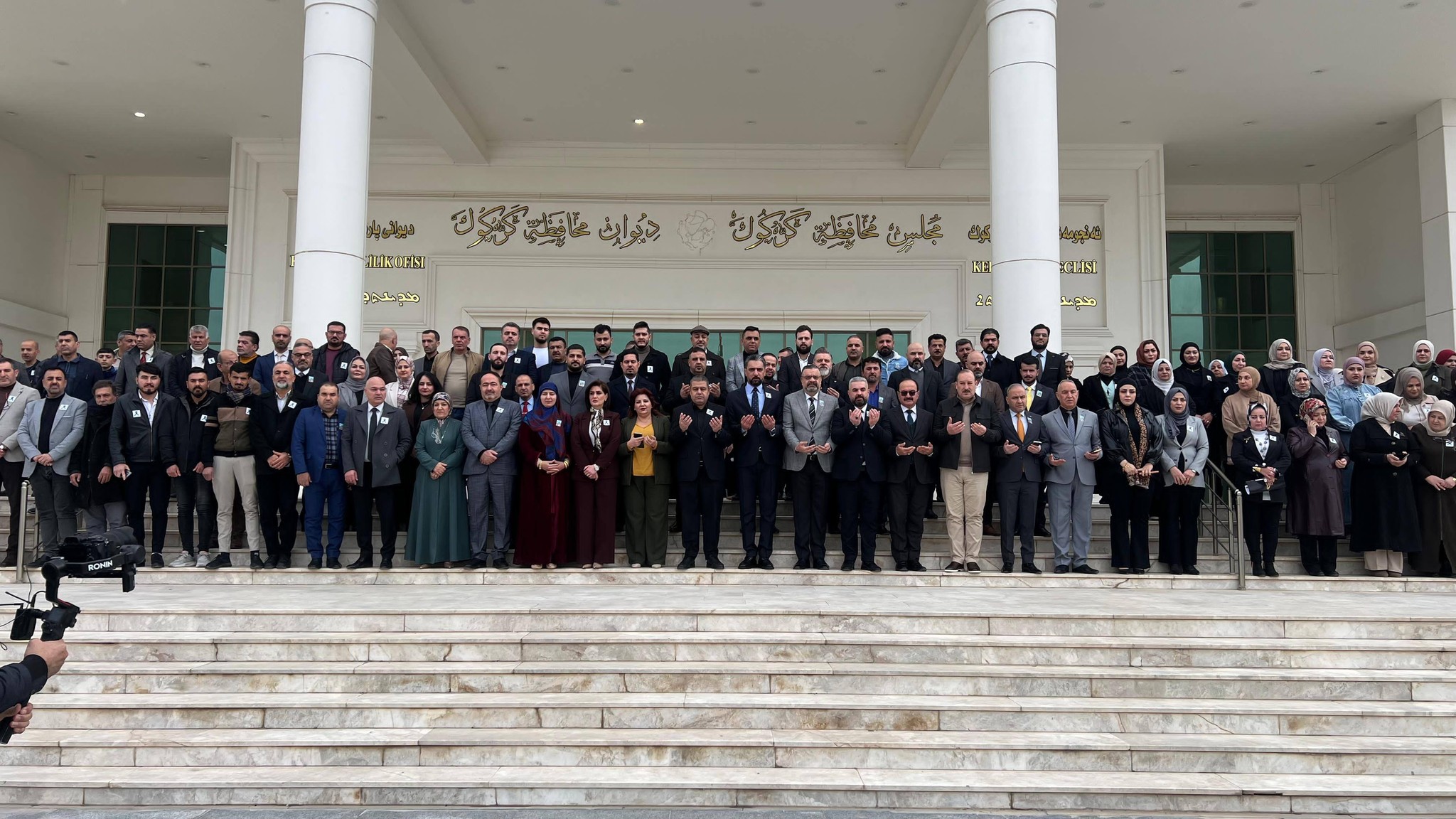
The northern, oil-rich, ethnically mixed province of Kirkuk is home to about 1,77 million Arabs, Kurds, and Turkmen. Located 238 kilometers north of Baghdad, Kirkuk has long been at the center of disputes between the federal government in Baghdad and the Erbil-based Kurdistan Regional Government KRG.
The Kirkuk agreement extends beyond the governorship, encompassing other senior provincial roles such as district mayors, sub-district directors, directors-general, and department heads. Over time, the agreement has taken on wider political significance, influencing dynamics beyond the province. The Progress Party and the PUK—principal architects of the deal—have maintained close coordination in Baghdad, with their leaders meeting multiple times in recent weeks.
Taha, who is also a member of the PUK Leadership Council, reaffirmed “any decision regarding the rotation of positions must be made collectively by the three parties that formed the local government. I would respect whatever decision is reached in the interest of Kirkuk’s stability and the agreement has contributed to improved security in the province.”
Although the ITF holds two seats on the council and was not originally part of the agreement, it has intensified efforts in Baghdad to advocate for the rotation of both the governor’s office and the council chairmanship.
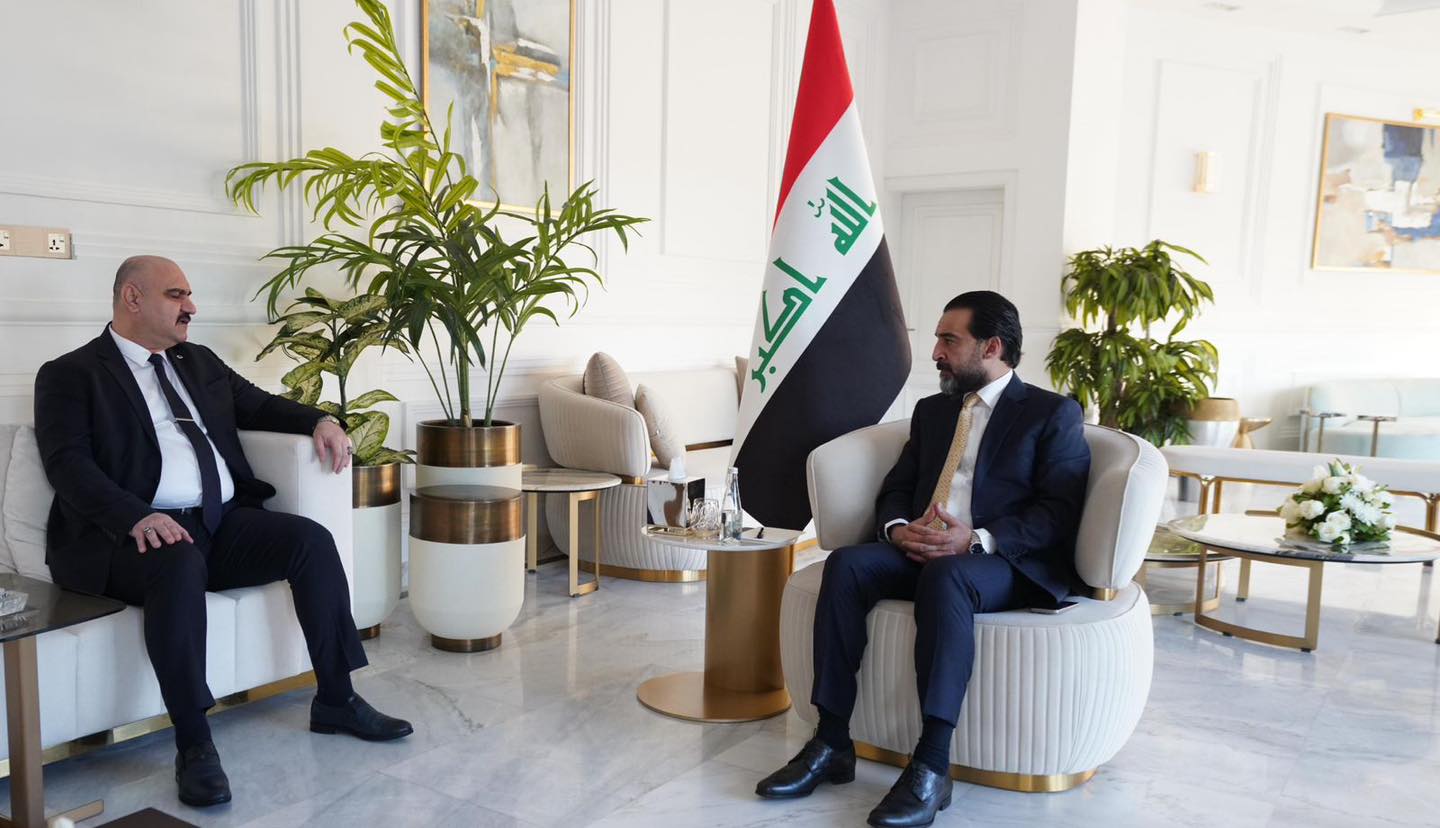
During a January 26 meeting in Baghdad, Progress Party leader Mohammed al-Halbousi and head of ITF Mohammed Samaan discussed the rotation issue. Halbousi reaffirmed his commitment to honoring political agreements, stressing the importance of safeguarding the rights of all communities, ensuring stability in Kirkuk, and advancing services and investment.
Ahmed Ramzi, a Turkmen Front representative on the provincial council, said the concept of rotating the governorship was first proposed by the Turkmen community “as a way to ensure inclusive administration.”
“Given that voter registration records have not been audited, the election results alone cannot fairly determine power distribution. For that reason, the rotation was the most practical solution under the current circumstances”
Ramzi concluded by stating that, according to the agreement, “the second term of the governorship should go to the Turkmen community.” He emphasized that they are awaiting implementation and insist that the terms of the agreement be upheld.
During the Ba'ath era (1968–2003), key administrative and governing positions in Kirkuk were largely controlled by the Arab community, and these roles were assigned without elections. Following 2003, executive authority shifted to the Kurds, who maintained leadership until 2017. At that point, the position returned to Arab leadership, before being reclaimed last year by a Kurdish candidate affiliated with the PUK.
After the 2005 provincial council elections, Abdulrahman Mustafa, a Kurdish representative, became Kirkuk’s first governor in the post-election period. In 2011, the same council elected Najmaddin Karim, also from the Kurdish PUK, as governor. He remained in office for six years before being removed by a decision of the Iraqi parliament.
Since 2003, administrative positions in Kirkuk have been distributed according to a power-sharing formula allocating 32% each to Kurds, Arabs, and Turkmens, and 4% to Christians. This arrangement was based on an initiative proposed by former Iraqi President Jalal Talabani and the late PUK secretary. The Kirkuk provincial council approved the plan in July 2009, although it did not apply to lower-ranking positions.
The future of Kirkuk province and other disputed territories between Baghdad and Erbil is governed by Article 140 of the Iraqi Constitution, which outlines a three-step process: normalization, a census, and a referendum.