


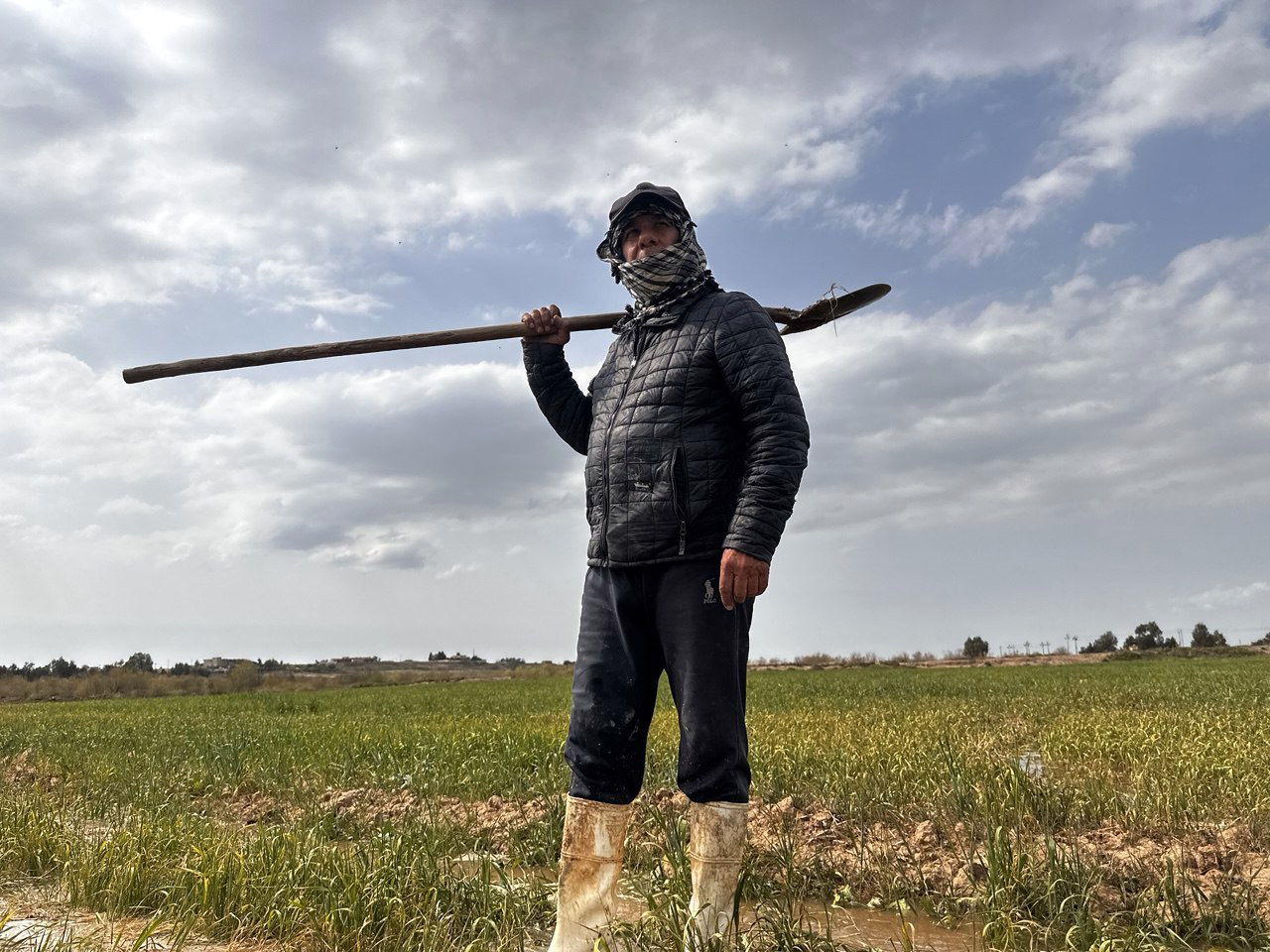

Khalil Ashraf, a farmer from the village of Mohammed Shirbag in the western Khanaqin district, stands beside the Alwan River irrigating a large stretch of farmland—land that belonged to his ancestors but was taken from his family for more than fifty years.
Today, hope has returned for Khalil and hundreds of other farmers in Khanaqin and the disputed territories. Under a new law and through agricultural contracts, they may finally regain ownership of their lands after decades of waiting. However, the process is not simple; reclaiming the land requires numerous documents and navigating a long chain of administrative procedures.
Half a Century of Separation
The roots of the problem date back to 1975. Khalil was only eight years old when his family, along with hundreds of other Kurdish families, was expelled from their homeland as part of the Ba’ath regime’s Arabization policies.
“After we were displaced and forced to leave our homeland, our farmland was confiscated and handed over to Arabs brought from other regions,” Khalil told KirkukNow. Khalil is now an elderly farmer living in Mohammed Shirbag village of Khanaqin district in Diyala province.
During the late 1970s, decisions issued by the Revolutionary Command Council and the Committee for Northern Affairs under the Ba’ath government led to agricultural lands of Kurdish and Turkmen farmers being redistributed to Arab settlers from central and southern Iraq. This policy accompanied the forced displacement of Kurdish and Turkmen families.
Khalil, who now represents several farmers in the area, said that Kurdish families returned to their lands after the fall of the Saddam regime in 2003, when many of the Arab farmers left the village.
Yet the problem remained unresolved. While Kurdish farmers physically returned to their lands, official records still listed the properties under the names of the Arab settlers.
“Until today, the contracts are still registered in the names of the Arabs,” Khalil said. “Because of that, Kurdish farmers have been deprived of government agricultural support and assistance.”
The issue remained unresolved for years, including after the events of October 16, 2017, when Iraqi federal forces returned to Khanaqin and other disputed territories following the Kurdish referendum for independence. During this time, some Arab farmers attempted to reclaim the lands again.
Khalil and other farmers, with support from their representatives in the Iraqi parliament, continued pushing for a resolution. Their efforts eventually led to a legal pathway for restoring their rights.
Thousands of Beneficiaries, Many Procedures
Thousands of farmers stand to benefit from the decision to return agricultural lands and renew contracts. However, the process remains complicated, and not all farmers have been able to complete their paperwork.
According to Ibrahim, about 3,400 Kurdish farmers across Diyala province were displaced due to the former regime’s policies and had their lands confiscated. The new law now allows them to renew their contracts and reclaim their ancestral farmland.
The measures are part of the Land Restitution Law passed by the Iraqi parliament in 2025, which aims to cancel Ba’ath-era decisions issued by the Revolutionary Command Council under Saddam Hussein.
In Khanaqin alone, around 670 farmers had their lands confiscated and are now eligible to renew their contracts. However, officials say that many farmers have not yet completed the required procedures.
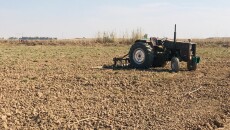
Diyala, 2026: The main road in Mohammed Shirbag village, located in the western Khanaqin district. KirkukNow.
Statistics from the Khanaqin Agriculture Department show that more than 2,000 agricultural land contracts were granted to Arab settlers between 1976 and 2003. These contracts cover roughly 7,500 hectares of farmland across Khanaqin and its surrounding villages.
Yousef Ibrahim, head of the legal department at the Khanaqin district administration, told KirkukNow that Kurdish farmers must present several documents when applying to renew their contracts.
These requirements include original and copied official documents, deed of inheritance, and the appointment of a representative among the heirs. The application must then pass through security approval and other administrative offices before a new contract can finally be issued in the farmer’s name.
The land restitution law applies to hundreds of thousands of hectares across Kirkuk, Salahaddin, and Diyala provinces.
The Deed of Inheritance: A New Obstacle
Despite progress, a new legal challenge has emerged: the requirement for heirs to take a formal Deed of Inheritance.
“The heirs must swear the oath and appoint someone to represent them in completing the legal procedures,” Ibrahim explained.
Because many of the lands are still registered under the names of deceased ancestors, all heirs must participate in the process.
Khalil describes this requirement as “an impossible condition.” Many heirs, he says, have died, live abroad, or cannot be gathered due to family and social complications.
“These conditions have become an obstacle preventing us from officially reclaiming our land,” Khalil said.
He proposes that the land should first be restored under the names of the original owners—his fathers and grandfathers—and only afterward distributed among heirs according to inheritance laws.
Khalil also believes farmers deserve compensation for the decades they were deprived of the income generated by their lands.
An Unfinished Resolution
Agricultural land disputes remain among the most complex issues in Khanaqin and other disputed territoies such as Kirkuk. Conflicts over land ownership have sparked numerous disputes among Kurdish, Arab, and Turkmen farmers.
Resolving these disputes is considered part of the early stages of implementing Article 140 of the Iraqi Constitution, which addresses the status of disputed territories.
Although officials say progress is being made in restoring land rights, Khalil remains cautious.
For him, justice will only be achieved when the land is officially registered once again in his family’s name.