


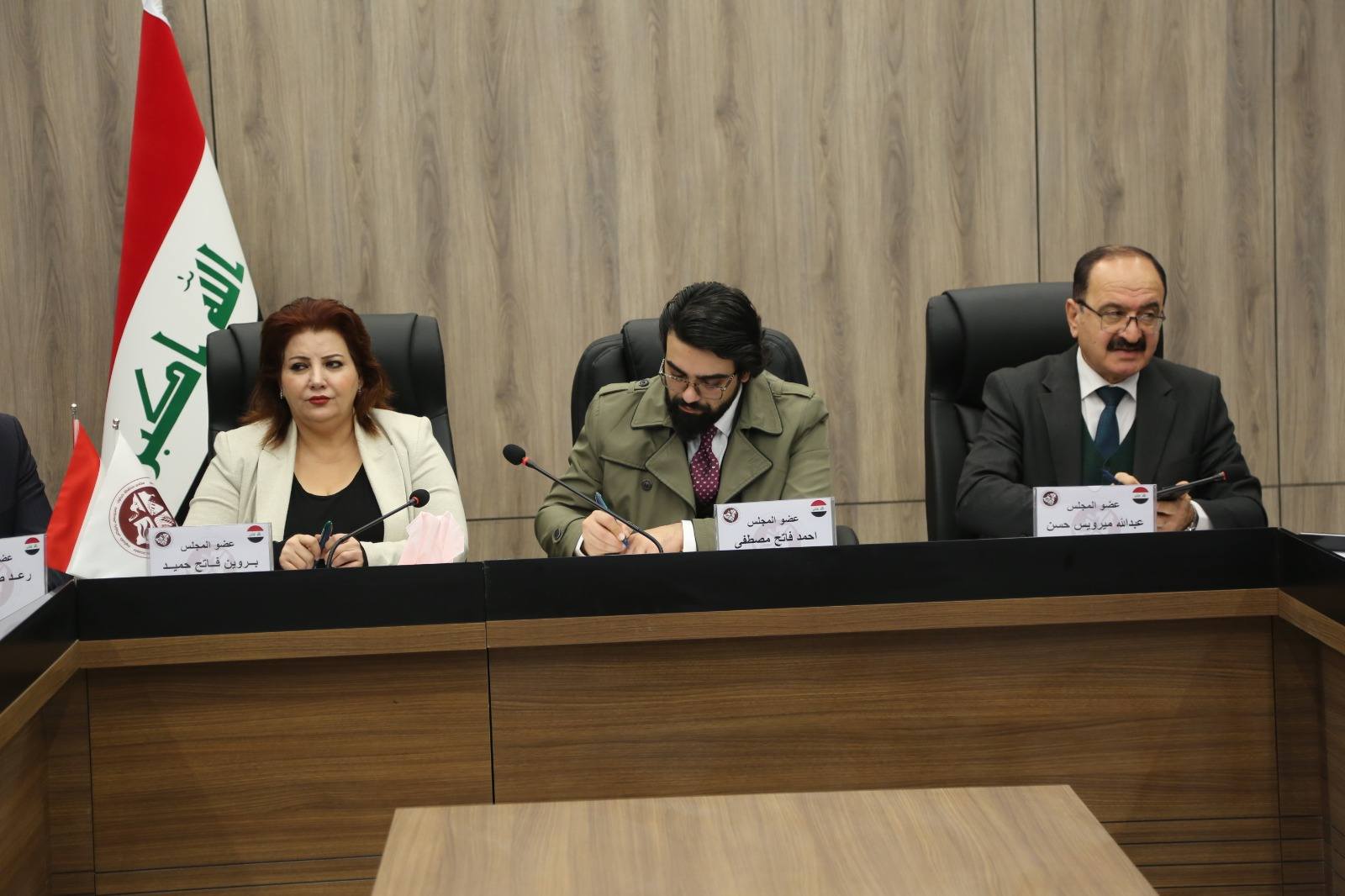

Members of the Patriotic Union of Kurdistan (PUK) within the Kirkuk Provincial Council have announced they will not take part in today’s council session, which is set to address the rotation of the governorship.
The (PUK) has reportedly agreed to transfer the Kirkuk governorship to the Iraqi Turkmen Front ITF as part of the local government formation deal signed in August 2024, with indications that ITF leader Mohammed Saman is likely to take over the position, sources told KirkukNow.
Council member Abdullah Mirwais stated that all PUK representatives are currently in Sulaimaniyah attending a party meeting, making their participation in the session impossible. He added that no decision has yet been made whether the meeting will be rescheduled.
The council had planned to convene at 12:15 PM on Thursday, April 16, to discuss the resignation of Governor Rebwar Taha and to appoint a successor.
Meanwhile, several council members representing Arab and Turkmen groups indicated that the PUK had agreed to Taha’s resignation and to transferring the governorship to the Turkmen Front. Mohammed Samaan, head of the ITF, has reportedly been selected for the role as part of a broader arrangement involving the redistribution of positions.
Earlier, on April 14, ITF representative Sawsan Abdul Wahid confirmed that the decision to hand over the governorship to the Turkmen community had already been finalized. Similarly, Arab council member Raad Saleh stated that the agreement aligns with a political deal reached on August 10, 2024, and reaffirmed Mohammed Samaan as the proposed candidate.
Under the agreement reached at Baghdad’s Al-Rashid Hotel in August 2024, the Kirkuk governorship would remain with the Kurds until December 31, 2025, then be transferred to the Turkmen as of December 2026, and later to the Arabs.
The Kirkuk local government was established on August 10, 2024, at Baghdad’s Al-Rashid Hotel, with the participation of five PUK members, two members of the Leadership List, the sole Arab representative, and the only Christian member—bringing the total to nine out of 16 council members.
However, seven other members did not take part in the agreement and remained in opposition. This group included three members from the Arab Coalition in Kirkuk, two from the Kurdistan Democratic Party (KDP), and two from the (ITF).
On the ground, a group of PUK supporters gathered outside Governor Taha’s residence in the Darwaza neighborhood, voicing opposition to any leadership change and urging PUK council members to boycott the session.
Before the protest, Taha’s media office released a statement denying his resignation and confirming he remains in office, while also noting his readiness to comply with any directive issued by party leadership.
Sources indicate that the five PUK council members are currently meeting with party leader Bafel Talabani in Sulaimaniyah to deliberate on possible changes to the governorship.
The northern, oil-rich, ethnically mixed province of Kirkuk is home to approximately 1.77 million Kurds, Turkmen, and Arabs. Located 238 kilometers north of Baghdad, it has long been at the center of disputes between the federal government in Baghdad and the Erbil-based Kurdistan Regional Government (KRG).
Under Iraqi law, the governor is elected by the provincial council and then formally appointed by a presidential decree. Parliament recently elected the PUK candidate Nizar Amedi as president in its April 11 session.
Turkmen, the third largest ethnic group in Iraq after Arabs and Kurds, are spread across the country, residing almost exclusively in the northern towns and villages stretching from Tal Afar through Mosul, Erbil, the center of Kirkuk, and Altun Kopri district, Tuz Khurmatu of Salahaddin, and Kifri and Khanaqin in Diyala. They are all Muslims, half Sunnis and half Shiites.