


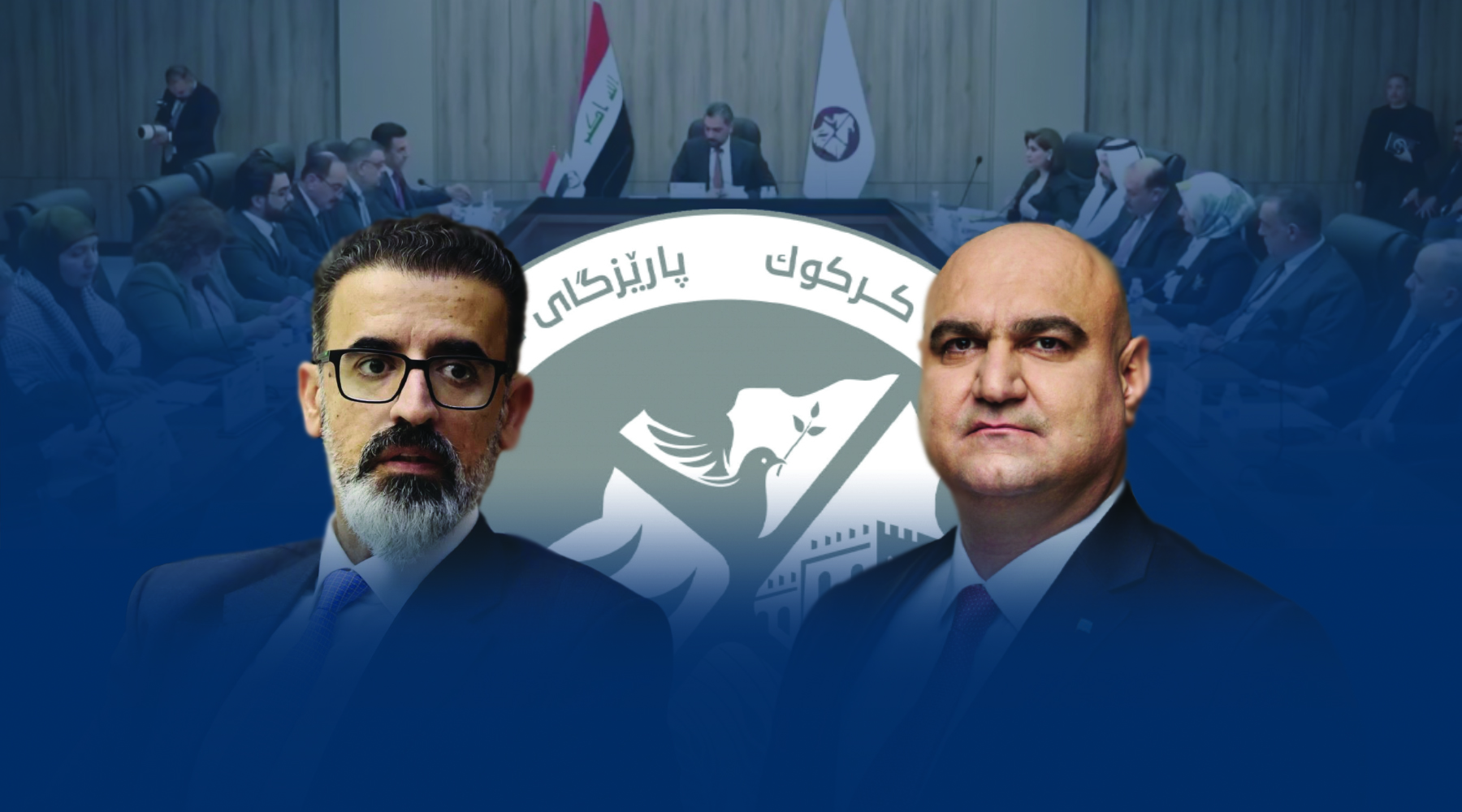

Just minutes of a Kirkuk Provincial Council meeting were enough to put an end to the conflicts and disputes that had lasted for a year and eight months, a crisis that essentially began with a similar session held at the Al-Rasheed Hotel in the Iraqi capital, Baghdad.
After 20 months (614 days) of boycotts, resorting to the courts, and a media war that brought the provincial council to the brink of paralysis, the council convened on the evening of April 16, 2026, with 14 of its 16 members present, to change the leadership of the local government's executive branch and appoint a new governor.
The rotation included, in addition to the governor, several other administrative positions and filled the vacant seats on the provincial council. The parties that once rejected the results of the Al-Rashid Hotel meeting have become key players in the very administration they once considered "illegitimate."
The difference is that the Kurds regained the governorship after seven years of waiting through the legitimacy of the "Al-Rashid" meeting, while the Turkmen used the same legitimacy to realize a long-held dream and assume the governorship after more than a century of waiting. This is not the end of the road, however, as Kirkuk, under the same "legitimacy," is now facing further changes expected to take place early next year.
Resolution of the Al-Rasheed Dispute
The Kirkuk Provincial Council session, held late Thursday evening April 16, and boycotted by the Kurdistan Democratic Party (KDP), served as a formality to end the political conflict that began at the Al-Rashid Hotel.
The Kirkuk local government was formed on August 10, 2024, in Baghdad, with the participation of five members from the Patriotic Union of Kurdistan (PUK), two members from the Leadership List, one member from the Arabism List, and one member representing the Christian quota, thus constituting a quorum (9 out of 16 members).
However, the remaining members of the council—the Arab Alliance in Kirkuk (3 members), the Kurdistan Democratic Party (2 members), and the Iraqi Turkmen Front ITF (2 members)—did not participate in the government formation agreement but boycotted it and resorted to the courts.
The head of the Kirkuk Provincial Council, Mohammed al-Hafiz, stated in a press conference held on the night of April 16, which was attended by a KirkukNow correspondent, that the rotation of positions stipulated in the government formation agreement was delayed due to regional circumstances and tensions in the area. He described the current steps as serious and aimed at strengthening the partnership for the sake of Kirkuk.
In late 2024 and early 2025, the Administrative and Federal Courts rejected several complaints filed by the opposition group regarding the legitimacy of the local government elections in Kirkuk Province. These included complaints from the former governor of Kirkuk and head of the Arab Alliance, Rakan Saeed al-Jiburi, and the former head of the IYF, Hassan Turan.
The instability, including the boycott of council sessions, persisted until the preceding months saw a gradual return of boycotting members to council meetings. However, the media campaign against the Kirkuk government by the opposition remained unchanged.
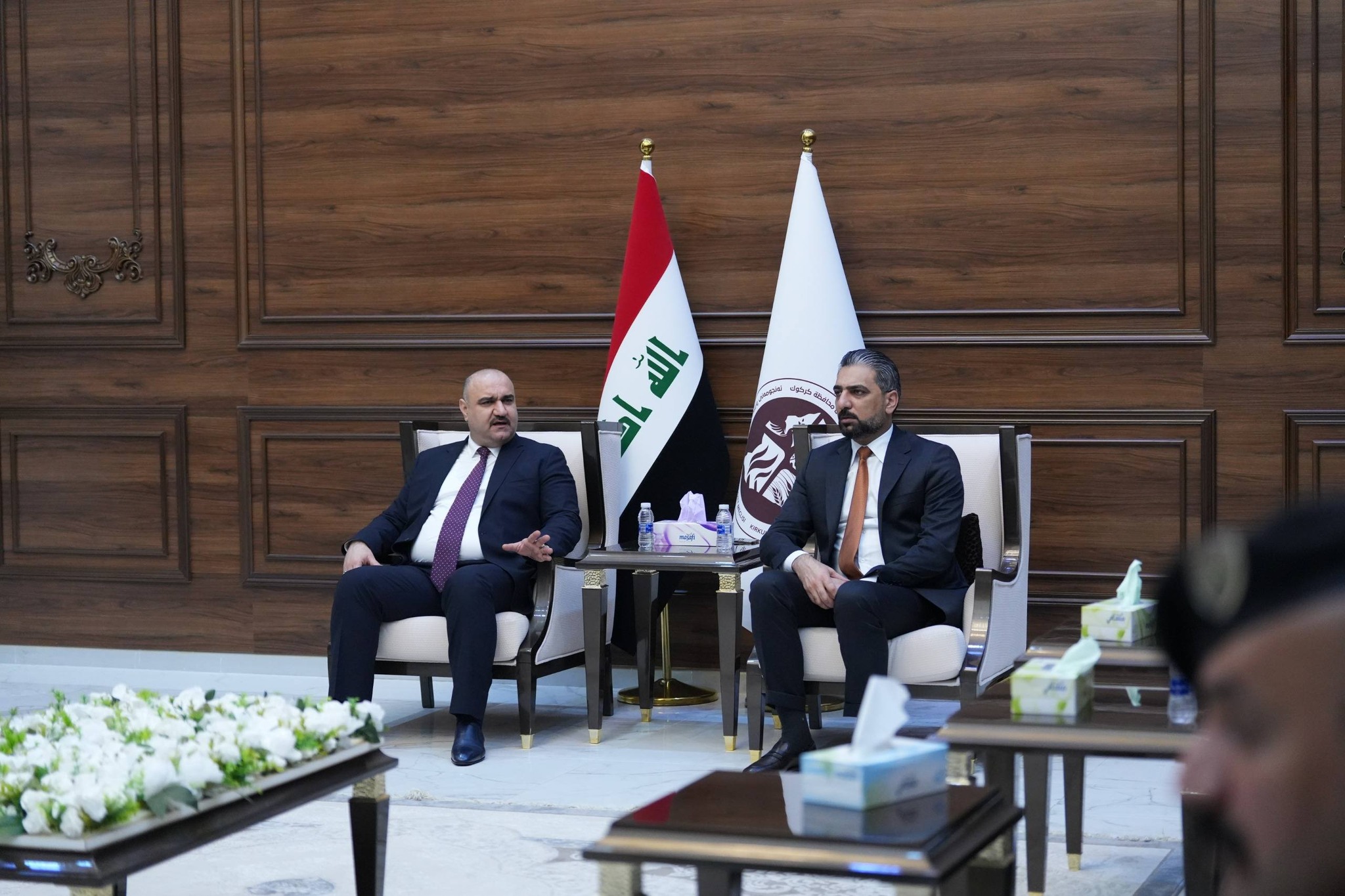
Kirkuk Provincial Council member, representing the Arab component, Zahir Anwar al-Assi, revealed in an interview with KirkukNow in September 2025 that, according to the political agreement to form the local government, the governorship would rotate, beginning January 1, 2026, with the Turkmen and then the Arabs. He indicated that this rotation was guaranteed by a number of politicians, including the Secretary-General of Asa'ib Ahl al-Haq AAH, Sheikh Qais al-Khazali.
the governorship would rotate, beginning January 1, 2026, with the Turkmen and then the Arabs
Tensions have eased since late last year, particularly on the eve of the sixth Iraqi parliamentary elections, with renewed discussions about rotating positions in early 2026. Meanwhile, the Turkmen have publicly expressed their desire to assume the governorship, a position they have been demanding for years.
Sawsan Abdul Wahid, a member of the Kirkuk Provincial Council representing the Turkmen Front, told KirkukNow that the Turkmen position had been clear from the outset of the Rashid Hotel agreement. They had concerns about the agreement, but were informed at the time that one of its clauses stipulated that the position be given to a Turkmen. "We were waiting to see if the parties would adhere to the agreement or not," she said.
This April, amidst the controversy surrounding the president of Iraq and its eventual allocation to the Patriotic Union of Kurdistan (PUK) candidate, the PUK agreed to hand over the Kirkuk governorship to the Turkmen Front.
A Challenging Transition
When Rebwar Taha assumed the governorship in August 2024, the provincial council blocs were at the height of their conflict. There was a sharp disagreement over the distribution of positions, and negotiations took place over several months under pressure from other parties, including the Iraqi Prime Minister, Mohammed Shia al-Sudani.
The decision to resign from the position, according to Rebwar Taha, was not easy. "Things arose that were beyond my control; I had to leave this post," he said.
The governor of Kirkuk, who received over 90,000 votes in the last parliamentary elections but chose not to take a seat, stated in a letter following his resignation that he had refused several positions in Baghdad to remain in Kirkuk.
"It is difficult for me to leave the governorship and become a deputy governor," but indicated that "all decisions will be made by consensus and with the participation of the deputy governors."
On the same day, April 16, Yawz Hamid submitted his resignation from the position of deputy governor, which he had held since 2024 representing the Turkmen component. This move led to his expulsion from the ITF.
An Arab candidate will assume the governorship in the next phase, and the incoming governor will remain in office until the provincial council elections are held.
In the session of April 16, the provincial council approved the resignation of Taha and elected a deputy governor after electing Mohammed Sam’an as governor of Kirkuk. The head of the PUK bloc, Nashat Shahwiz, was also elected deputy head of the provincial council.
Avesta Mohammed, from the same party, was appointed mayor of Central Kirkuk District, replacing Falah Yaychli (a Turkmen), and Adnan Hussein was appointed mayor of Daquq district, a position previously held by an Arab candidate. Awara Ahmed was appointed director of the Qarahanjir sub-district, in addition to several other positions, including deputy governor, advisor, and head of the governor's office.
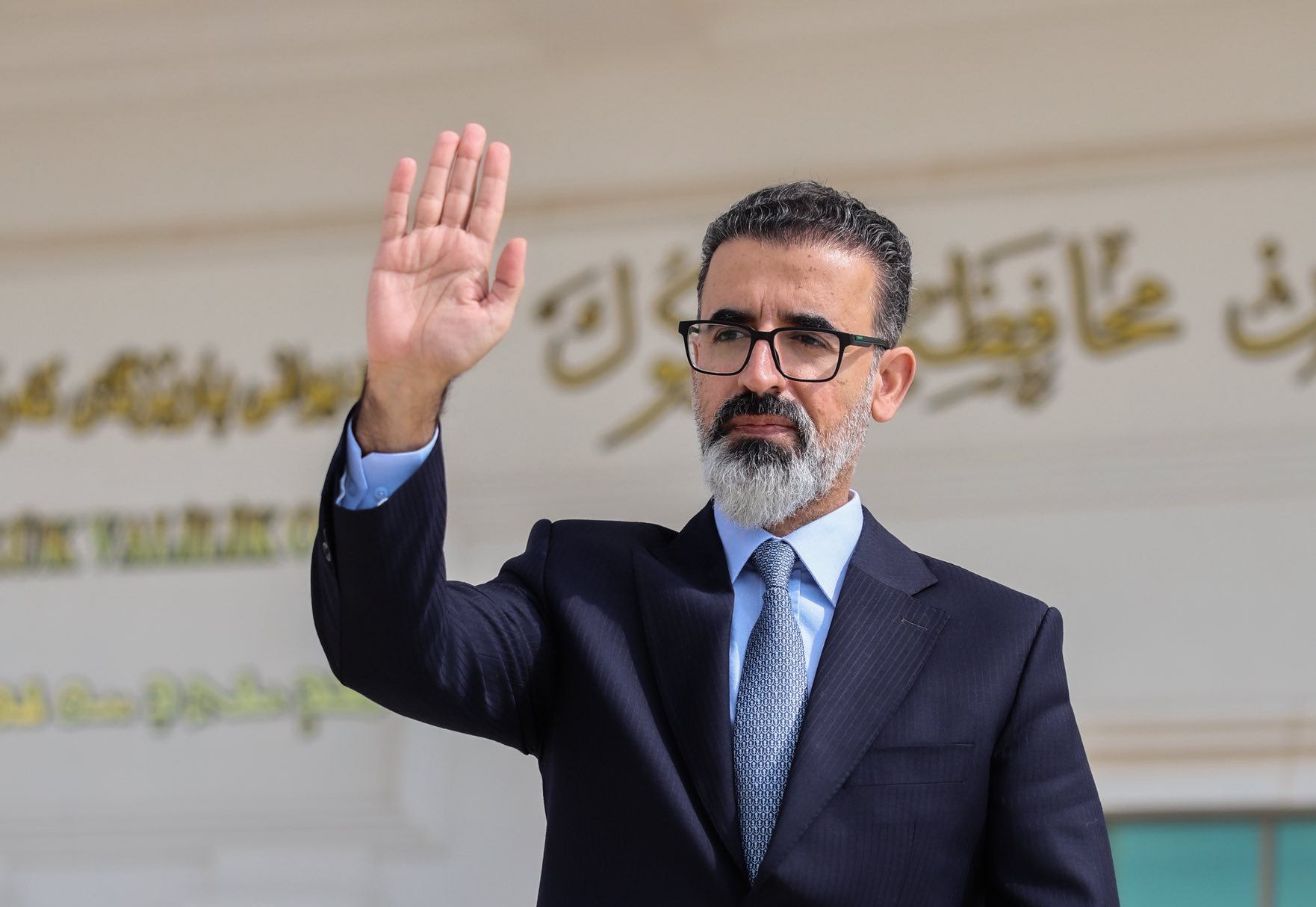
The new governor of Kirkuk, Mohammed Sam’an, stated in a press conference attended by a KirkukNow correspondent that the Turkmen had regained the position after 102 years, through a process of mutual understanding and coordination. He pledged not to represent any particular party or group. The last Turkmen governor of Kirkuk was Fatah Pasha in 1924.
Raad al-Saleh, a member of the provincial council representing the Arab community, explained to KirkukNow that "the Arabs will be harmed by this reshuffling because they will lose the position for nothing, as the Turkmen Front was not involved in the government formation agreement."
Just as Taha resigned from his post, Mohammed Sam’an is expected to face a similar fate. According to the same agreement, he has a specific timeframe to implement his government's administrative program before another component assumes the position. A new rotation of the position is scheduled for the end of this year or the beginning of next year.
The head of the provincial council explained that, according to the political agreement, an Arab candidate will assume the governorship in the next phase, and that the incoming governor will remain in office until the provincial council elections, which are scheduled to be held, according to the law, in late 2027.
A Shift in Council Dynamics
The Kirkuk Provincial Council meeting hall witnessed a different scene on the night of April 16th, as the majority of seats that had remained vacant for 20 months due to the boycott were occupied.
The Kurdistan Democratic Party (KDP), with two seats, was the only party absent from the session. In a statement, the KDP said, "This decision is not only a political stance but also an extension of our previous national positions, including the boycott of the meeting at the Rashid Hotel."
Neither the boycotting bloc nor the bloc participating in the government was able to fulfill its oversight duties or finalize the administrative positions. ITF member of the Kirkuk Provincial Council, Ahmed Ramzi, ended his boycott of council meetings a year ago, telling KirkukNow at the time, "I didn't believe in boycotts because we've tried them before and have bitter memories of them. Every boycott only harms the one who participates."
The situation has now completely changed. The 16-member Kirkuk Provincial Council is divided into two factions: nine members who are part of the government, or what is known as the "Rashid Hotel faction," and seven who oppose it. This division has shifted several times according to agreements and negotiations between the political parties. Ultimately, only two members from the KDP and one member from the Arab component continued to boycott the sessions.
Former Kirkuk Governor Rakan Saeed al-Jiburi, after 800 days as a council member, returned to participate in the April 16th session and voted on the rotation of the governorship and other positions.
According to the council's internal regulations and the Provincial Councils Law, any member who is absent from four consecutive sessions after a quorum is reached, without a valid excuse, will have their membership terminated. However, this procedure has not been implemented.
Kirkukis would see a "real" council
Mohammed Al-Hafiz reiterated his request to the (KDP) to return to the provincial council meetings. In a press conference on April 16 at night, he emphasized that Kirkukis would see a "real" council and did not conceal the fact that the disputes and boycotts had hampered the council's work.
Disagreements over the administration and distribution of positions in Kirkuk have a long history. For this reason, only two provincial council elections have been held in the province: one in 2005 and the most recent in 2023.
According to the Provincial Councils Elections Law No. 12 of 2018, power is to be shared fairly, ensuring the participation of all components of the province, regardless of the election results, as stipulated in Article 35 pertaining to Kirkuk Province.
During the Ba'athist regime, most key positions of power in Kirkuk were held by the Arab community without any elections. After 2003, the Kurds assumed executive power until 2017. The Arab community regained the governorship when al-Jiburi, the deputy governor, was appointed governor of Kirkuk. The Kurds then reclaimed the position in 2024 with the appointment of Taha as governor. Currently, the position is held by a Turkmen.
The first governor of Kirkuk after the 2005 provincial council elections was Abdul Rahman Mustafa, a Kurd. In 2011, Najmadin Karim, from the (PUK), was elected governor by the same council. Six years later, he was removed from office by a decision of the Iraqi parliament.
After 2003, based on a proposal by the late Jalal Talabani, former President of Iraq and former Secretary-General of the PUK, it was decided to distribute administrative positions in Kirkuk Province with 32 percent allocated to each of the Kurds, Arabs, and Turkmen, in addition to 4 percent for the Christian community. This proposal was approved by the Kirkuk Provincial Council on July 28, 2009, although this agreement did not extend to other positions.
Kirkuk Province (population over 2.34 million) is considered a disputed territory between the Iraqi Federal Government and the Kurdistan Regional Government. Its final status is linked to the implementation of Article 140 of the Constitution, which includes three phases: normalization, a census, and a referendum.