



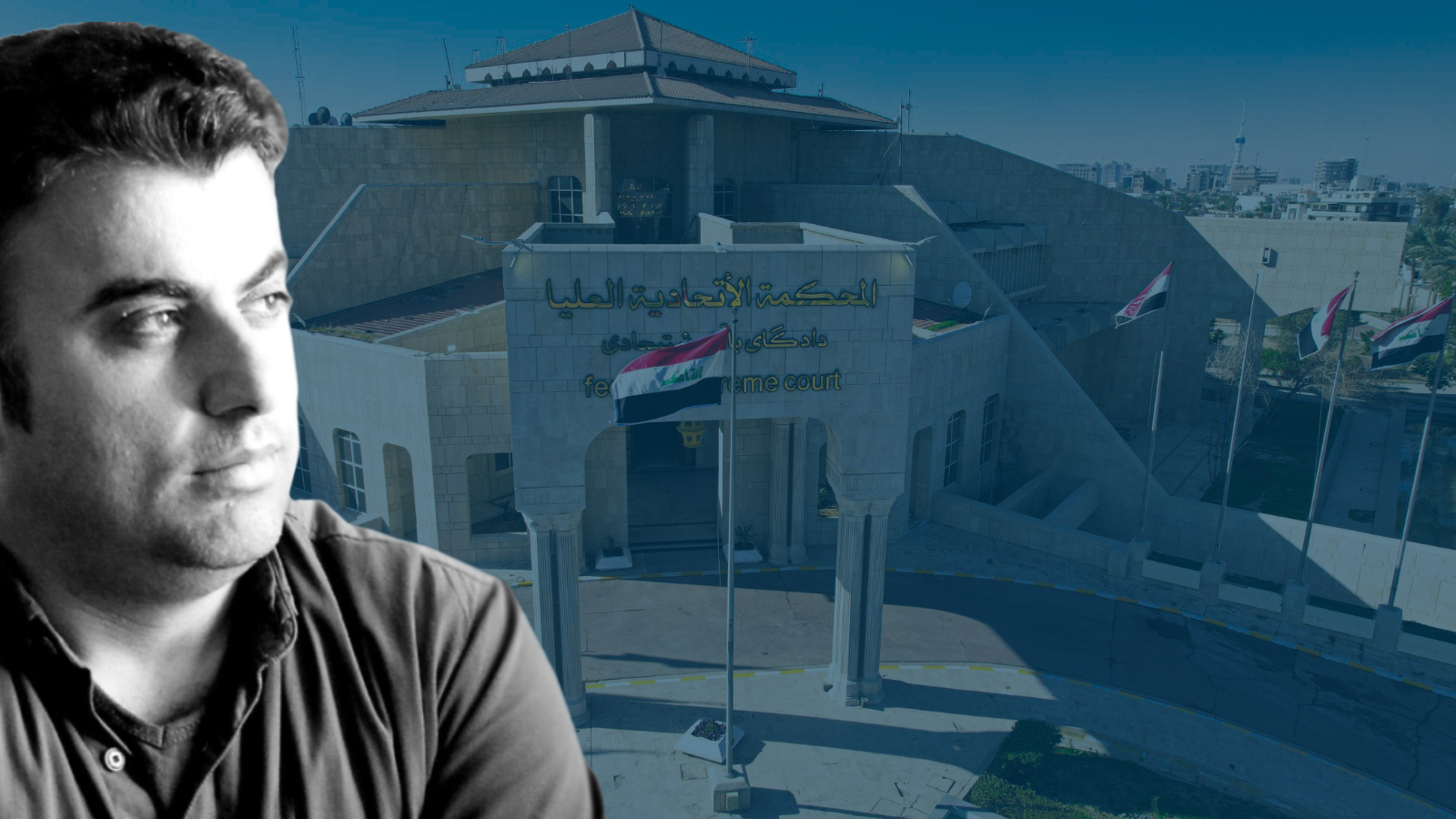

The Iraqi Federal Supreme Court has ruled Law No. 21 of 2003 unconstitutional, a law under which the Kurdistan Regional Government KRG has prosecuted more than 50 journalists, activists, teachers and others in recent years.
On October 13, 2026, the Federal Supreme Court ruled that Law No. 21 of 2003 contradicts Articles 110 and 121(2) of the Iraqi Constitution.
The law was passed on September 27, 2003, during an ordinary session of the Kurdistan Parliament chaired by Rozh Nuri Shaweis.
Consisting of six articles, the legislation’s first article replaces Article 156 of the Iraqi Penal Code. It provides for punishment of anyone who deliberately engages in an act intended to undermine the security, stability or sovereignty of the institutions of the Kurdistan Region.
KirkukNow previously published an investigation into Law No. 21, examining how the wording and scope of its first article allowed authorities to use the legislation to pursue journalists and activists in court instead of applying the region’s Journalism Law.
Article 1 of Law No. 21 is based on Article 156 of Iraq’s Penal Code No. 111 of 1969, although the wording and penalties differ. Under the original Article 156, which the former Ba’ath regime used against the Peshmerga, anyone who deliberately endangered or undermined Iraq’s independence, territorial integrity or security faced the death penalty.
Some individuals prosecuted under Law No. 21 were working as journalists before their arrests. Evidence presented in their cases included information, messages and photographs exchanged in private messaging applications or group chats. The defendants maintained that these communications were intended to share journalistic ideas and information.
Meanwhile, Law No. 35 of 2007 stipulates that the Kurdistan Union of Journalists must be notified in advance of legal proceedings against journalists.
The Federal Supreme Court’s ruling marks a significant development for press freedom and raises questions about the legal basis for previous prosecutions under Law No. 21, as well as the status of those who remain imprisoned under the legislation.