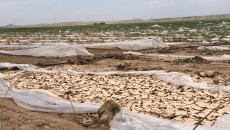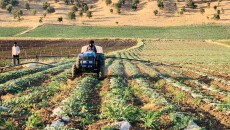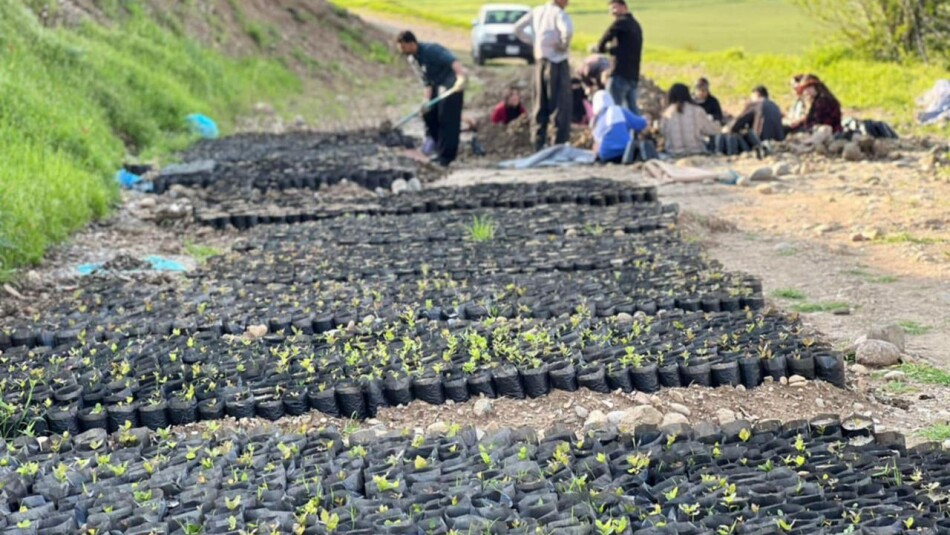
A new environmental initiative in Qaladzy aims to restore green spaces while honoring the memories of martyrs and celebrating the birth of new children. The project, centered at the Razani Nursery in the Pishdar sub-district, plans to plant 100,000 tree seedlings across the region to combat drought, restore barren hillsides, and promote environmental awareness.
Among those inspired by the initiative is Ismat Ali, whose brother was killed by the Ba'ath regime four decades ago. He looks forward to planting and caring for a tree dedicated to his brother's memory, describing it as a meaningful way to express his love and preserve his legacy.
The project combines three goals: reforesting degraded landscapes, commemorating martyrs through dedicated tree planting, and gifting a seedling for every newborn in Qaladzy. Organizers believe this approach will strengthen public engagement while expanding the district's green cover.
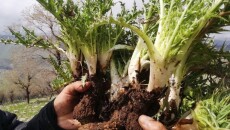
Located approximately 100 meters from the Little Zab River, the Razani Nursery prepares and nurtures seedlings before transplanting them to suitable locations. According to project founder and supervisor Ali Dinka, the seedlings are first grown in specialized bags and cared for over the course of a year. They are then planted on hills and other non-agricultural land to increase forested areas without affecting farmland.
I intend to protect the tree planted in my brother's memory for the rest of my life
The initiative is managed by the Kurdistan Environment and Reconstruction Center in partnership with the House of Heritage and Culture in Qaladzy and is funded by businessman Dr. Taha Rasul.
A team of 14 volunteers, including eight women, maintains the nursery across 212 dunams of land. The project includes thousands of native tree species, such as Aleppo (gall) oak, pistachio, and oak trees, selected according to local terrain and environmental needs. Oaks are planted on slopes and elevated areas to reduce soil erosion, while pistachio trees are placed in lower-lying locations.
To ensure successful growth, wells will be drilled where water is scarce, and the newly planted trees will receive drip irrigation for their first two years.
To date, the team has prepared more than 20,000 seedlings, including 14,000 designated for Pishdar, 5,000 for Halabja, and 700 for the village of Guptaba in Chamchamal district. Organizers expect to prepare an additional 80,000 seedlings by February next year.
Project data indicate that Qaladzy has approximately 700 recognized martyrs, and one tree will be planted in honor of each. Project coordinators are working closely with the families to determine appropriate planting sites.
The program is expected to continue in future years, with 70 percent of the seedlings allocated to Pishdar and the remaining 30 percent distributed to surrounding areas.
Ismat Ali expressed deep appreciation for the initiative. “I intend to protect the tree planted in my brother's memory for the rest of my life.” He believes the project not only benefits the environment but also provides comfort and recognition to the families of martyrs.
Beginning next November, the maternity ward at Qaladzy Hospital will also present a tree seedling to the family of every newborn, symbolizing new life and encouraging environmental stewardship from the earliest stages of life.
Ali Dinka added that, starting next year, the Razani Nursery is expected to produce enough seedlings to meet the municipality's needs, eliminating the need to import saplings from outside the district.
The project team will maintain the trees until they reach approximately two meters in height over a period of four years. Afterward, responsibility will be transferred to landowners, who must sign an agreement pledging not to cut down the trees.
Shorish Kaka Fathullah, Director of the Raparin Forestry and Environment Police, affirmed the agency's commitment to supporting the initiative. He stated that forestry authorities will monitor the project, protect the planted trees, and take legal action against anyone who attempts to damage or destroy them.
This report was produced by the KirkukNow team as part of the project "Future Through Innovation: Together for Climate and Local Development," implemented by ADWI in the Kurdistan Region of Iraq with funding from the German Federal Ministry for Economic Cooperation and Development (BMZ).