



Qasim Tahir Mustafa, commonly known as Qasim Agha of Koya, a former jash leader and collaborator to the Baʿath regime, has died, according to sources close to his family.
He reportedly passed away on Thursday January 15, 2026, due to heart disease. Although his death occurred two years after his sentencing, it remains unclear whether he died in Erbil or abroad. Sources indicate that he had traveled to Turkey approximately one month earlier to receive medical treatment for his heart condition.
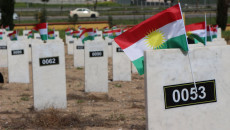
Qasim Agha had been accused by the Kurdistan Regional Government KRG of collaborating with the former Baʿath regime during the Anfal campaign during which he was leading a battalion of (National Defense Battalions) , which resulted in the deaths of more than 180,000 Kurdish civilians, mainly women and children. On November 5, 2023, the Sulaimaniyah Criminal Court (Second Chamber) sentenced him to life imprisonment in absentia following a complaint filed by the relatives of a Peshmerga fighter.
According to a source present at the trial, the case dates back to 1988, when Qasim Agha and members of his jash group allegedly captured a wounded Peshmerga fighter, who later died as a result. The court’s ruling was based on both testimonial evidence and a video recording presented during the proceedings.
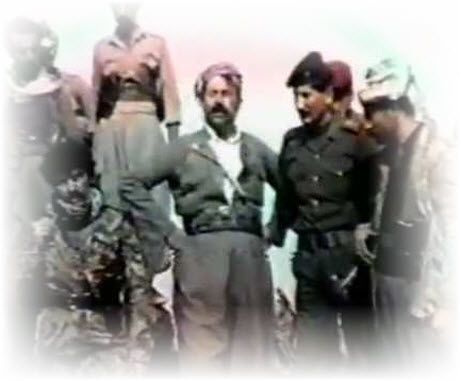
The footage reportedly shows Qasim Agha accompanying Iraqi army forces and several jash members during the incident.
In the same video, which was reviewed by the KirkukNow team and relied upon by the court, another Peshmerga fighter is seen falling to the ground, though it remains unclear whether he was killed or wounded. The recording also depicts Qasim Agha and an Iraqi army officer holding the rank of lieutenant interrogating the injured Peshmerga about his residence, neighborhs, and political affiliations.
Despite a general amnesty issued by the Kurdistan Front—an alliance of Kurdish political forces—which offered clemency to jash leaders and advisors (Mustashar) in 1992 on the condition that they surrender, Qasim Agha reportedly refused to comply and remained in Baghdad until the collapse of the Baʿath regime in 2003.
Following the regime’s fall, the Iraqi Supreme Criminal Court issued an arrest warrant against him, and numerous complaints were filed in courts across the Kurdistan Region of Iraq KRI. Subsequently, he left Iraq, and his whereabouts remained unknown until reports of his death.
The term jash originates from the Kurdish word meaning “donkey” and is used pejoratively to describe individuals regarded as traitors or collaborators who cooperated with forces perceived as hostile to the Kurdish people. During the 1980s, Kurds who aligned themselves with the Iraqi government were commonly labeled as jash. Their numbers reportedly reached approximately 150,000, a phenomenon partly attributed to attempts to avoid compulsory military service during the Iran–Iraq War.
Following the 1991 Kurdish uprising, many individuals identified as jash realigned with broader Kurdish society. Nevertheless, full social and political reconciliation was not universally achieved, and lingering grievances remained. The commander of a jash regiment was referred to as mustashar (advisor), reflecting their intermediary role between the Iraqi state and local Kurdish forces.