



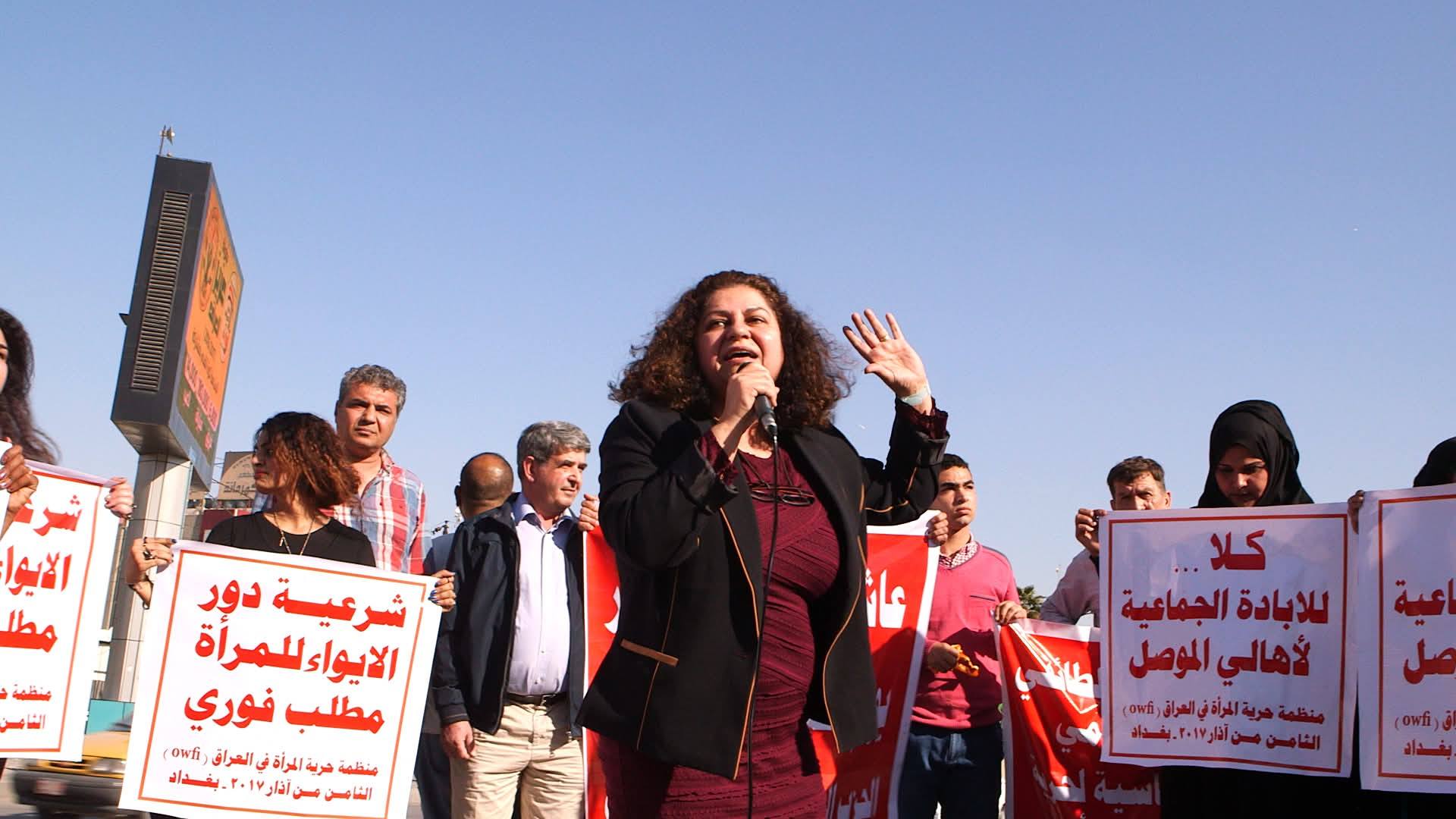

Just one day before she was killed, Iraqi women’s rights advocate Yanar Mohammed urged authorities to end the culture of impunity, particularly for those responsible for targeting and trafficking women.
Following her death, activists across Iraq have repeated that same demand—this time insisting that those responsible for her killing be held accountable.
Yanar Mohammed, the president of the Organization for Women’s Freedom in Iraq (OWFI), was shot at approximately 9:00 a.m. on Monday, March 2. The attack took place outside her residence in the Shaab area of Baghdad’s Rusafa district, where gunmen riding two motorcycles opened fire. She suffered severe injuries and was rushed to the hospital, but according to a statement from OWFI, she died despite doctors’ efforts to save her.
News of the assassination quickly triggered widespread outrage online and among human rights and women’s rights groups. Activists condemned the attack and renewed calls to end the impunity that often protects perpetrators of violence—an issue Yanar herself had spoken about only hours before her death.
At 66 years old, Yanar had spent decades advocating for women who experienced violence, abuse, and human trafficking. On March 1, the day before she was assassinated, she took part in the 20th conference of the Network Against Trafficking in Women in Baghdad. The conference focused on the question: “Are women’s rights disappearing in Iraq and Syria?”
During a panel discussion, Yanar emphasized the urgent need to prosecute those involved in trafficking women, particularly in cases of sexual exploitation. “Here, traffickers of women go unpunished,” she warned.
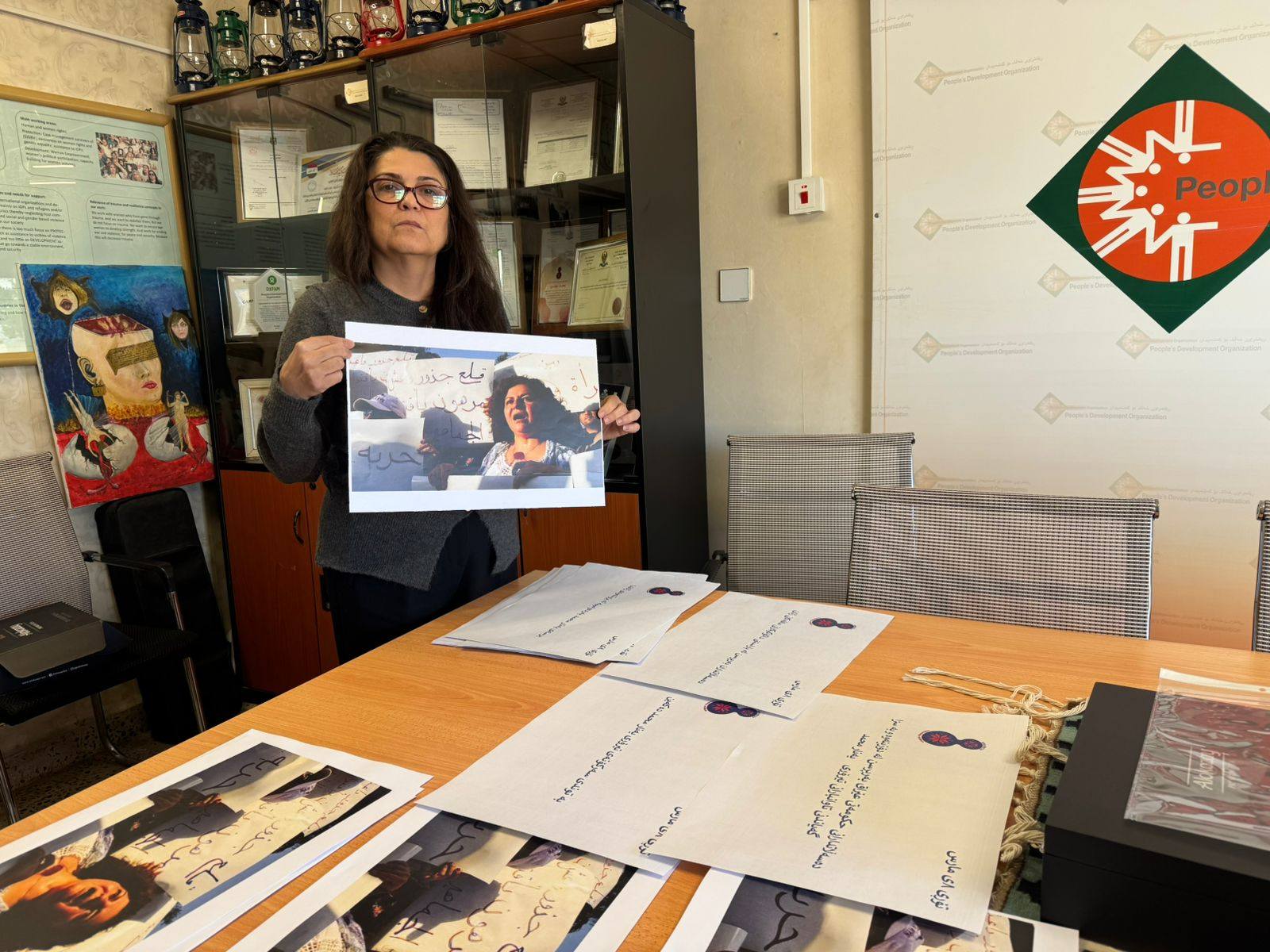
Sulaimaniyah, March 3, 2026: March 8 Network during their preparations for a protest rally against the killing of Yanar Mohammed. People for Development Organization
Basma Haji, an Ezidi (Yazidi) activist and member of Wadi, a German-Iraqi organization who also attended the conference, told KirkukNow that "Yanar strongly supported Yazidi women who had endured rape, enslavement, and other atrocities committed by Daesh (The Islamic State in Iraq and Syria ISIS). According to Haji, "Yanar repeatedly called for ISIS members responsible for such crimes to face justice and pushed for the establishment of a special court to address these cases."
Despite existing legislation, activists remain concerned that anti-trafficking laws in Iraq are rarely enforced. Basma Haji explained that although legal frameworks exist, “weak implementation has allowed the crime to continue spreading throughout the country.”
Yanar repeatedly called for ISIS members responsible for such crimes to face justice and pushed for the establishment of a special court to address these cases
Yanar was also a co-founder and administrator of a women’s shelter in Baghdad. Since its creation, the shelter has provided protection to hundreds of women fleeing threats, violence, or possible honor killings.
Her advocacy for women’s rights spans more than twenty years. After the fall of Saddam Hussein’s Ba’ath regime in 2003, she established OWFI, dedicating her life to defending women subjected to violence and discrimination.
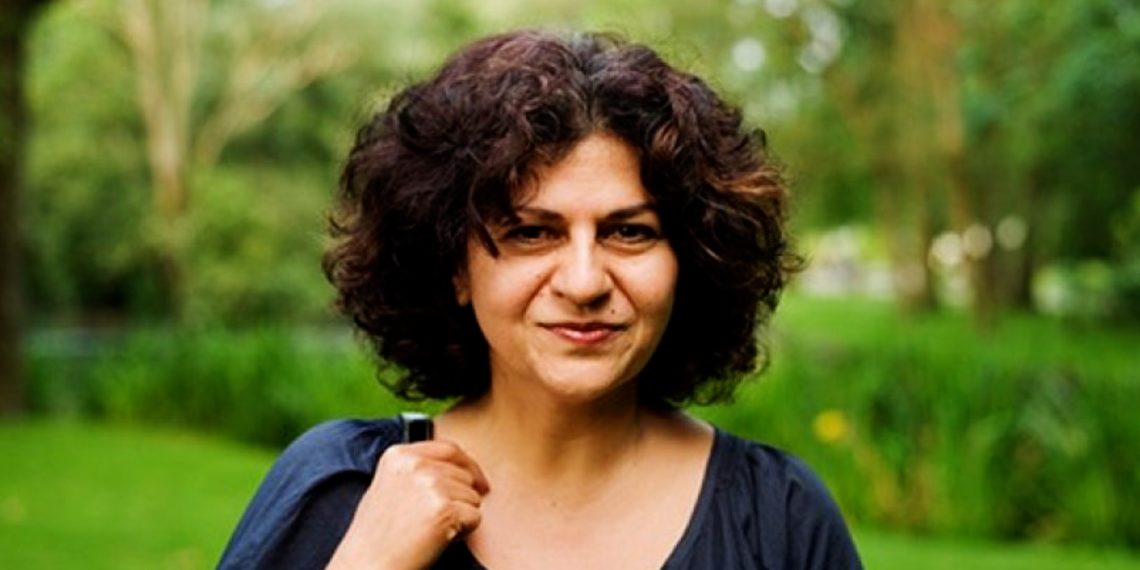
At the Baghdad conference on combating human trafficking, Yanar also stressed that ISIS militants who had returned to Iraq after the conflict in Syria should be prosecuted without delay. Ignoring their cases, she argued, was unacceptable given the serious crimes they had committed against women.
In a statement following her death, OWFI described Yanar as “a fearless and principled feminist voice who confronted violence and discrimination in all forms,” noting that she continued her activism despite threats and smear campaigns.
Her work received international recognition in 2016 when she was awarded the The Rafto Prize for Human Rights. The prize, worth $20,000, is presented annually in Bergen, Norway, to individuals who demonstrate exceptional commitment to defending human rights.
After the assassination on March 2, Iraqi Interior Minister Abdul-Amir al-Shammari announced the formation of a specialized investigative committee to examine the case. He said the investigation would focus on gathering evidence, identifying the motives behind the attack, and ensuring that the perpetrators are brought to justice.
OWFI strongly condemned the killing, describing it as “a direct attack on the feminist struggle and on the principles of freedom and equality.” The organization urged authorities to immediately identify those responsible and end the climate of impunity that threatens human rights defenders.
The murder has sparked strong reactions among Iraqi women and activists. Calls for a swift and transparent investigation have intensified, and protests have taken place across the country. In Sulaimaniyah, representatives from dozens of organizations and members of the March 8 Network gathered at Azadi Park to demonstrate and demand accountability.
During the Baghdad conference, Yanar had also warned that violence and violations against women continue to rise, including increasing harassment and attacks on social media. Basma Haji emphasized that broader efforts and greater awareness are needed to confront these issues.
Yanar Mohammed was scheduled to travel to Canada—her second home—just days after the attack. However, the trip had been delayed because flights were suspended following Israeli and U.S. strikes against Iran.