


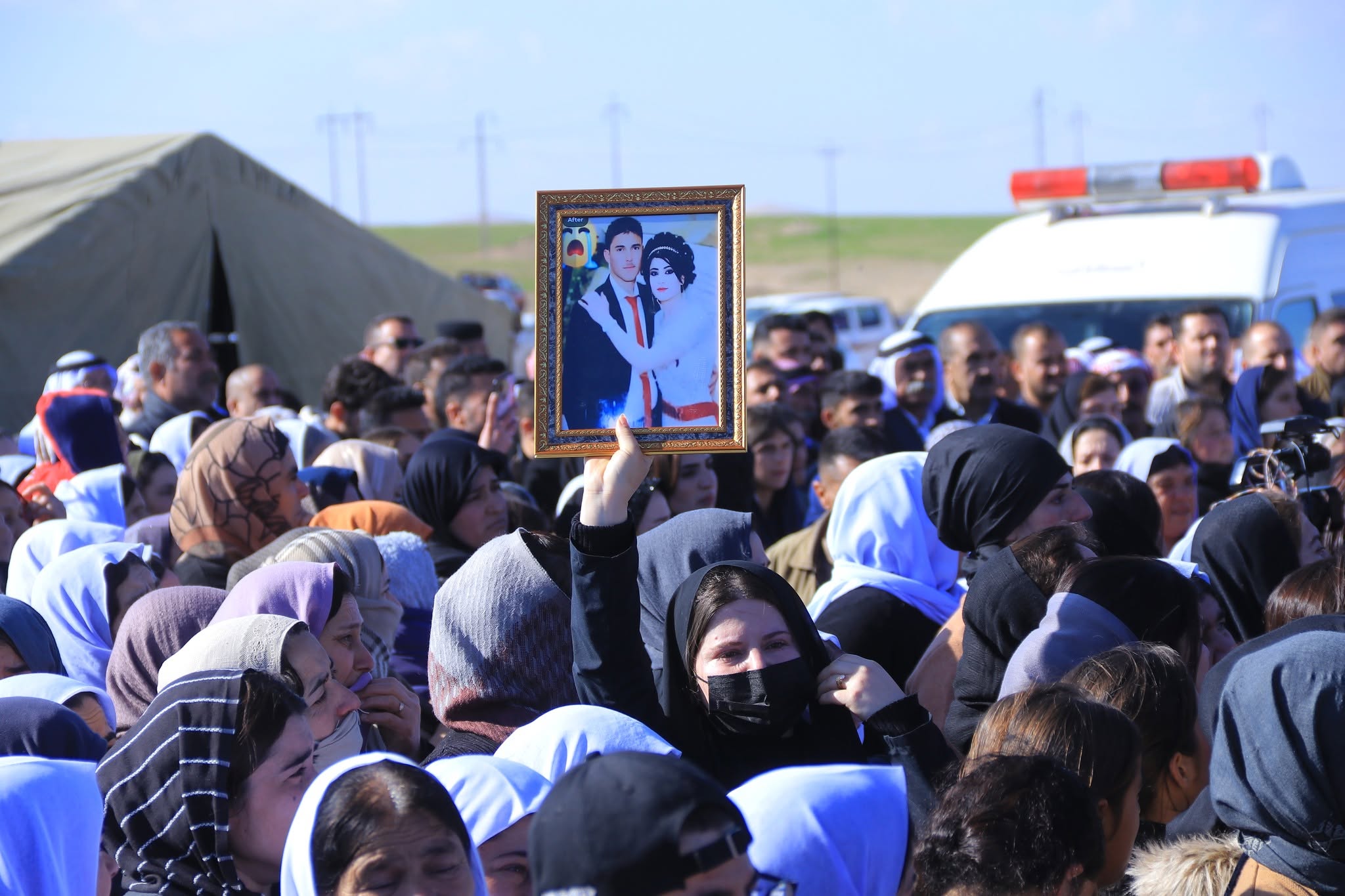

Less than a month after an appeal by the relatives of the Ezidis (Yazidis) slaughtered by extremist militants, the Iraqi government and several organizations have stepped up efforts to restart the identification of Ezidi victims' remains, bringing hope to families who have waited more than a year for answers.
The renewed effort follows a story by KirkukNow highlighting Badr Suleiman's story and detailing how the identification process had stalled. According to the report, the remains of victims were left at Baghdad's forensic medicine department because a budget of four billion Iraqi dinars had not been released.
The remains of Suleiman's grandmother, along with those of more than 400 other victims, were recovered a year ago from a mass grave in the Sulagh area, east of Shingal (Sinjar) in Nineveh Province, and transferred to Baghdad for DNA testing. During ISIS's 2014 assault on Shingal, approximately 2,930 Ezidis were killed, while more than 6,000 people were abducted. The fate of over 2,500 of those missing remains unknown.
According to KirkukNow, Iraq's Ministry of Finance has now approved funding for the forensic medicine department, while the Nadia Murad Initiative is supporting efforts to restart the identification process.
Khalid Saydo, an Ezidi member of the Iraqi Parliament, told KirkukNow that the primary obstacle had been the lack of funding.
On July 23, Ezidi lawmakers and activists, including Nobel Peace Prize laureate Nadia Murad, met in Baghdad to discuss the resumption of the identification process.
Faisal Ghanim, a representative of the Nadia Murad Initiative, said that blood samples from victims' relatives will be collected between August 2 and August 6.
“One of the forensic department's main challenges had been the shortage of blood samples needed for DNA matching. The Nadia initiative is also providing transportation for victims' relatives to facilitate the process.”
As the anniversary of the Ezidi genocide approaches, Ghanim said that one of the community's key demands is to complete the identification of victims and resolve the issue of the mass graves.
The most recent phase of identifying and returning victims' remains took place last August, when newly identified victims were laid to rest in cemeteries in Shingal.
More than 80 mass graves have been discovered in the Shingal region. The first excavation began on March 15, 2019, in the village of Kojo (Kocho). Since then, forensic teams have recovered 776 sets of remains and transferred them to Baghdad for examination. To date, 297 victims have been identified, while 479 sets of remains are still awaiting identification.