



Christians in the Kurdistan Region of Iraq have renewed their calls for justice over land they say has been confiscated or occupied for decades by political parties, tribes, government institutions, and influential individuals.
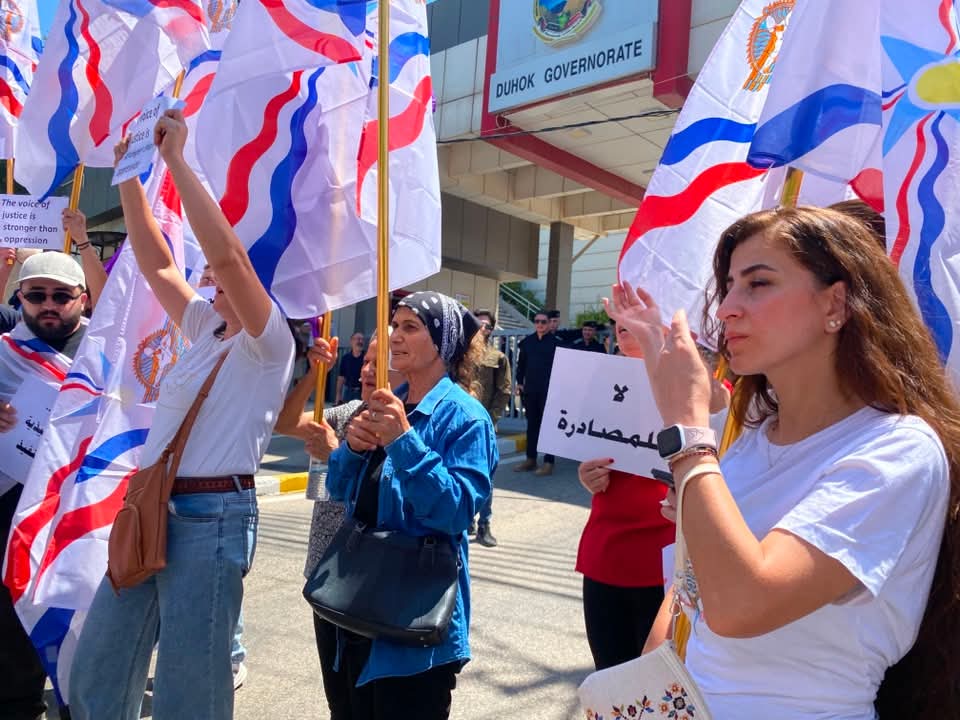
A demonstration outside the Duhok Governor's Office highlighted long-standing grievances over disputed property and the slow implementation of court rulings and compensation decisions.
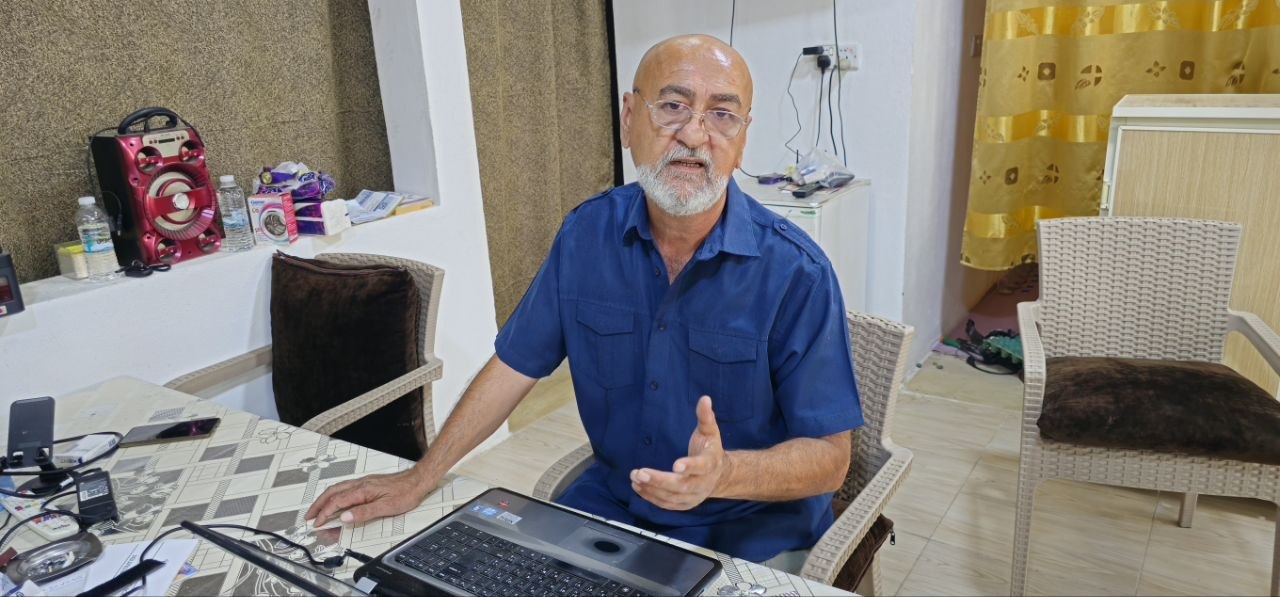
Among the protesters was Ashur Toma, 56, who has spent decades seeking compensation for 31 donums (7 hectares) of ancestral land in centre of Duhok northern province. According to Toma, much of the land has been converted into government facilities and party headquarters, yet he has received compensation for only three donums.
I have been compensated for only three donums. I want compensation for all of my land
"I have been compensated for only three donums. I want compensation for all of my land," Toma said.
During the demonstration, security forces reportedly prevented many Christians from surrounding districts from entering Duhok, limiting participation despite efforts by Christian political organizations to mobilize supporters.
Longstanding Land Disputes
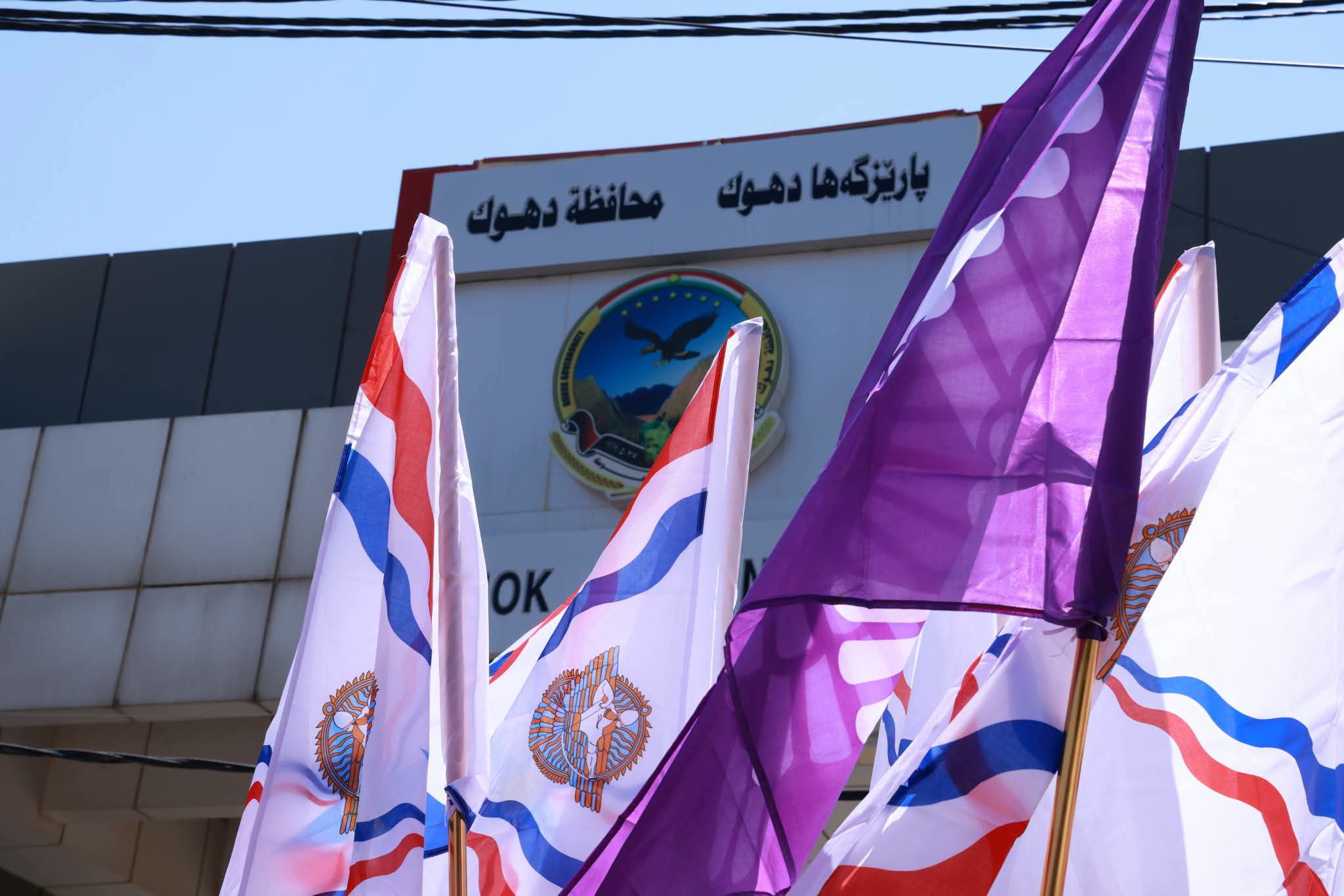
The protest, organized by the Assyrian Democratic Movement (Zowa), the National Union of Beth Nahrain, and the Assyrian National Party, called on the Kurdistan Regional Government (KRG) to either return confiscated land or provide fair compensation to Christian landowners.
Many of the disputed properties are classified as agricultural land allocated for farming. Under KRG regulations, when such land is repurposed for public projects, affected landholders are entitled to compensation. Toma argues that the government has failed to fully honor this obligation despite documentation proving his family's long-term ownership and use of the land.
According to documents reviewed by KirkukNow, Toma's land qualifies for compensation under existing regulations. After years of legal efforts, he received compensation equivalent to only three donums and continues to seek restitution for the remaining 28 donums.
Disputes Extend Across Duhok Province
Land disputes affecting Christians extend beyond Duhok city into districts including Amedi and Akre, where numerous villages have experienced encroachment.
In Akre district alone, residents say land belonging to eight Christian villages remains occupied despite favorable court rulings.
Ugr Ibrahim, a resident of Sur village, said more than 250 donums in the Gre Sur area belong to Christian families but remain under the control of individuals allegedly supported by a local Kurdish tribe.
According to him, these lands were originally registered in the names of Christian families before villages were destroyed during the Ba'ath era in the 1970s. Following those events, other groups gradually settled in the area and continue to occupy the disputed land.
Court Decisions Face Implementation Challenges
In 2017, then-Prime Minister Nechirvan Barzani established a committee to address disputes involving the eight villages.
The Akre Court of First Instance ruled in 2018 that the land should be returned to its original Christian owners. Although the decision was appealed, the Erbil Judicial Council upheld the ruling in 2022.
Despite these legal victories, implementation has been limited.
Police reportedly attempted several times to enforce the court's decision, but only one of the five occupants agreed to surrender the land. The remaining occupants continue using or leasing the disputed property.
"Following the Judicial Council's ruling, Dinarta police deployed teams to the disputed lands several times to enforce the decision," Ibrahim said. "However, only one of the five occupants agreed to return the land."
Despite the court's ruling, four of the five occupiers continue to retain control of the disputed property.
The remaining four still use the land, lease it annually for grazing
"The remaining four still use the land, lease it annually for grazing, and in some years earn up to 12 million Iraqi dinars (USD8,000) from it," Ibrahim added.
In other parts of Duhok province, including Amedi district, some Christian landowners have secured court decisions recognizing their ownership. However, many have yet to receive compensation or see those rulings implemented.
In the Azadi subdistrict of Sarsang and several other villages that no longer have Christian residents, authorities had approved compensation for the use of Christian-owned land, but those decisions have not been carried out.
Christian Leaders Demand Government Action
Christian political leaders argue that at least 56 Christian villages in Duhok province have experienced land encroachment.
Farid Yaqub, Deputy Secretary-General of the Assyrian Democratic Movement, said “Our party would continue advocating for the restoration of Christian property rights,” and warned that additional demonstrations could take place if meaningful action is not taken.
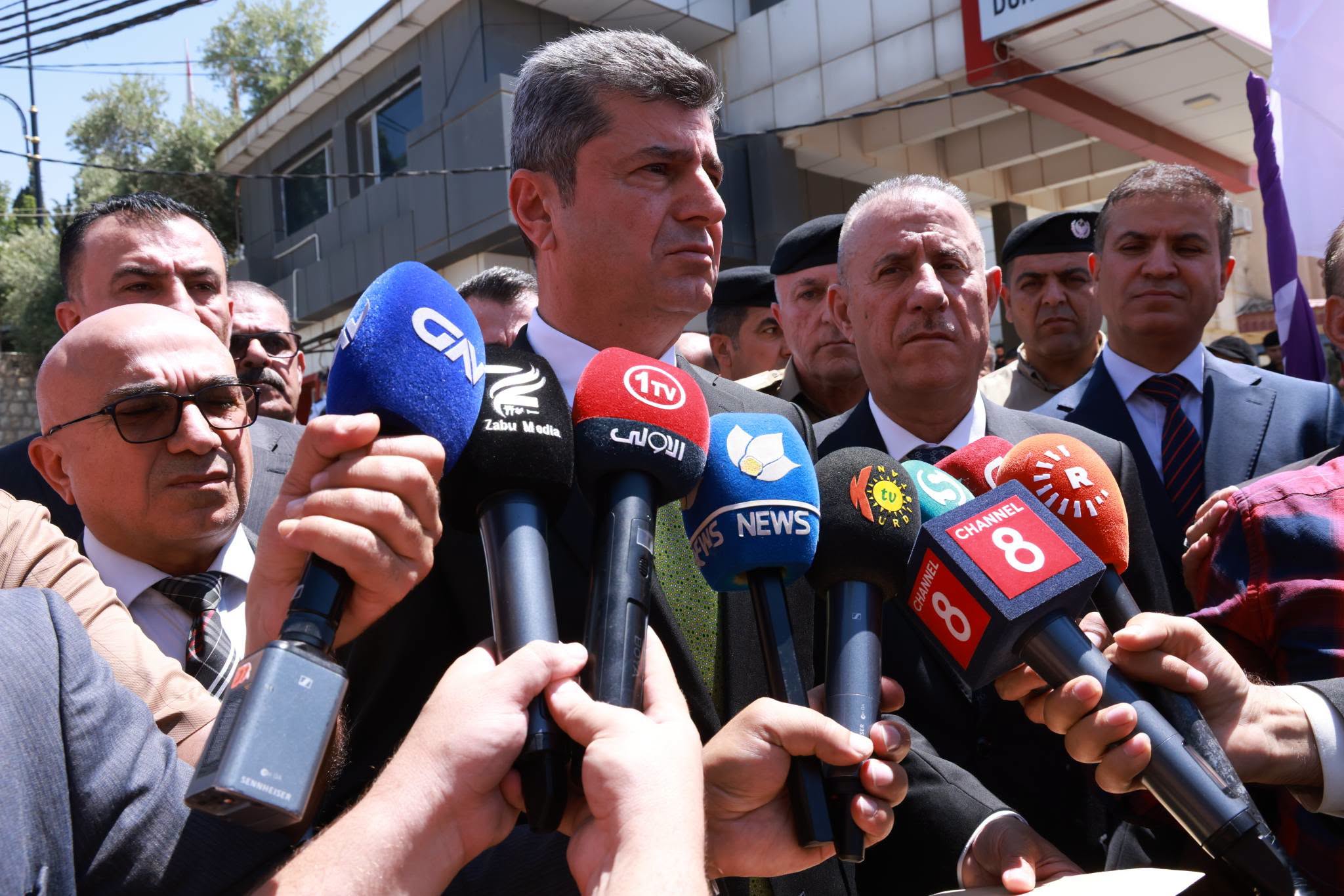
Following the July protest, Duhok Governor Ali Tatar promised to hold a comprehensive meeting involving the Interior Minister and other relevant officials to address the issue. However, Christian representatives say no date has yet been announced.
Officials Acknowledge the Complexity
Shamoun Shimon, a prominent Christian figure from the Dinarta sub-district whose village was destroyed four times under the Ba'ath regime and who now serves as one of Duhok's deputy governors, told KirkukNow that the Christian community is simply seeking the restoration of its legitimate property.
"Our people are not asking for anything beyond what is rightfully theirs," Shimon said. "Our ancestors lived in these villages, and we are only asking for those villages to be returned to us. They are our homes."
He acknowledged that resolving the issue will not happen quickly.
"This is a complex problem that has persisted for nearly 50 years, and only a small portion has been resolved," he said. "The compensation process requires significant financial resources, making it difficult. The Kurdistan Region's presidency and government are working to address the issue, but it cannot be solved overnight."
The compensation process requires significant financial resources, making it difficult
Christianity, Iraq's second-largest religion after Islam, is recognized under the Iraqi Constitution, which guarantees Christians the right to preserve their language, religion, and culture. Their rights are protected by both the Constitution and national law.
The Kurdistan Region's Law on the Protection of Community Rights also prohibits policies or actions that alter the historical character of areas inhabited by minority communities and seeks to prevent demographic change in those regions.
According to unofficial estimates, more than 50,000 Christians currently live in Duhok province.
Concerns Over Enforcement
Khalid Jamal, Director of Christian Affairs at the Kurdistan Regional Government's Ministry of Endowments and Religious Affairs, told KirkukNow that the primary challenge is not obtaining legal decisions recognizing Christian land rights, but ensuring those decisions are enforced.
"The problem is implementation," Jamal said. "Court rulings and government decisions to restore land or compensate Christians already exist, but they are often not carried out."
He expressed frustration over what he described as political interference in the enforcement process.
"We are deeply disappointed because officials fear political repercussions during elections due to the influence of powerful families and party figures. As a result, decisions to return Christian land often remain ineffective," he said.
Jamal also warned that new encroachments continue to occur.
"Christian-owned land is still being taken," he said. "In some cases, the government plans to allocate land to public employees without first verifying that it belongs to Christian owners." He cited the Semel sub-district in Duhok province as one example.
Majid Sayed Salih, Duhok's Deputy Governor for Technical Affairs, also stated that Christians have the legal right to seek compensation, though he cautioned that the process is lengthy and cannot resolve every case immediately.
A Continuing Struggle
For protesters like Ashur Toma, the issue remains deeply personal. His brother was executed in 1985 after opposing Ba'ath Party policies, while Toma himself says he endured imprisonment and torture.
Standing before the governor's office, he reflected on decades of hardship.
"We suffered under the Ba'ath regime, and today we continue to suffer because our rights have not been restored. We place our hope in God."