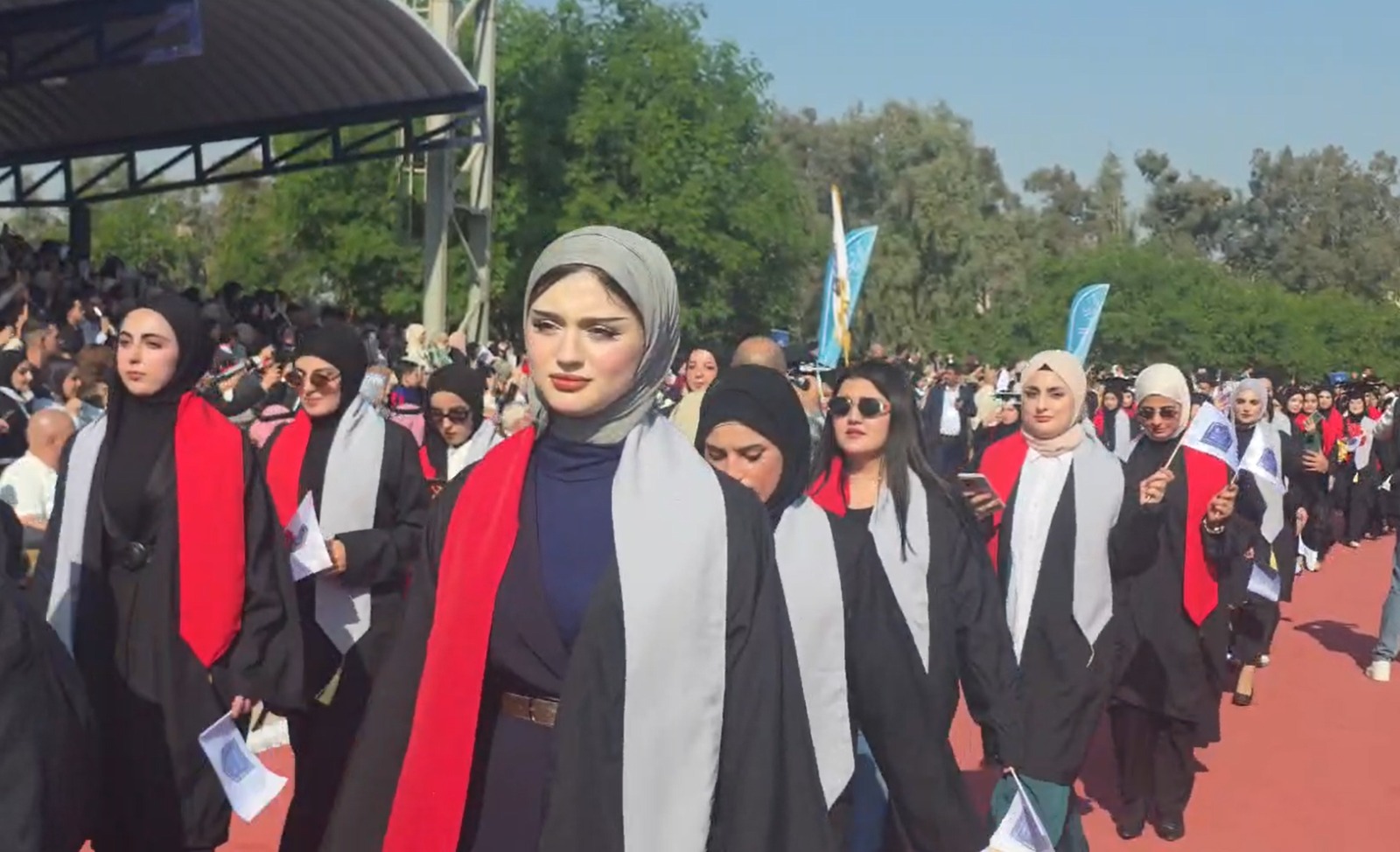

Every year, tens of thousands of university graduates embark on an uncertain journey in search of employment, as government hiring opportunities continue to shrink and finding a job in the private sector remains difficult.
Unemployment was a major concern among graduates of the Northern Technical University, whom a KirkukNow reporter interviewed during their graduation ceremony.
This year alone, 11,500 students from Nineveh, Kirkuk and Salahaddin provinces graduated from the university.
A Joy Overshadowed by Uncertainty
Even before putting on their graduation gowns and caps, many graduates are already worrying about their future, fearing that after four years of university education, they may end up sitting at home without a job.
Dina Salah, a graduate of the Anesthesia Department at the Technical Medical Institute in Mosul, says she would not feel truly happy if she were unable to find employment after graduation.
Around 600 students, both male and female, graduated from the same department at the institute this year.
Graduates of previous cohorts are still struggling to find jobs, prompting calls for the government to treat them fairly, give them priority in recruitment, or provide employment opportunities in the private sector, similar to those available in other fields.
Direct government employment for medical graduates is no longer available or has become severely limited, as authorities seek to reduce reliance on public-sector hiring amid mounting financial pressures.
The International Labor Organization (ILO) reported that the unemployment rate in Iraq has risen from 9% in the early 1990s to 14.2% in 2021.
Of Iraq’s 40 million people, approximately 9.2 million are employed. The country’s economy remains heavily dependent on the state, with the oil sector generating around 85% of government revenue. Meanwhile, public-sector salary expenditure has risen sharply, with the government now spending four times as much on salaries as it did 15 years ago. In 2020, approximately three-quarters of total state expenditure was allocated to paying public-sector employees.
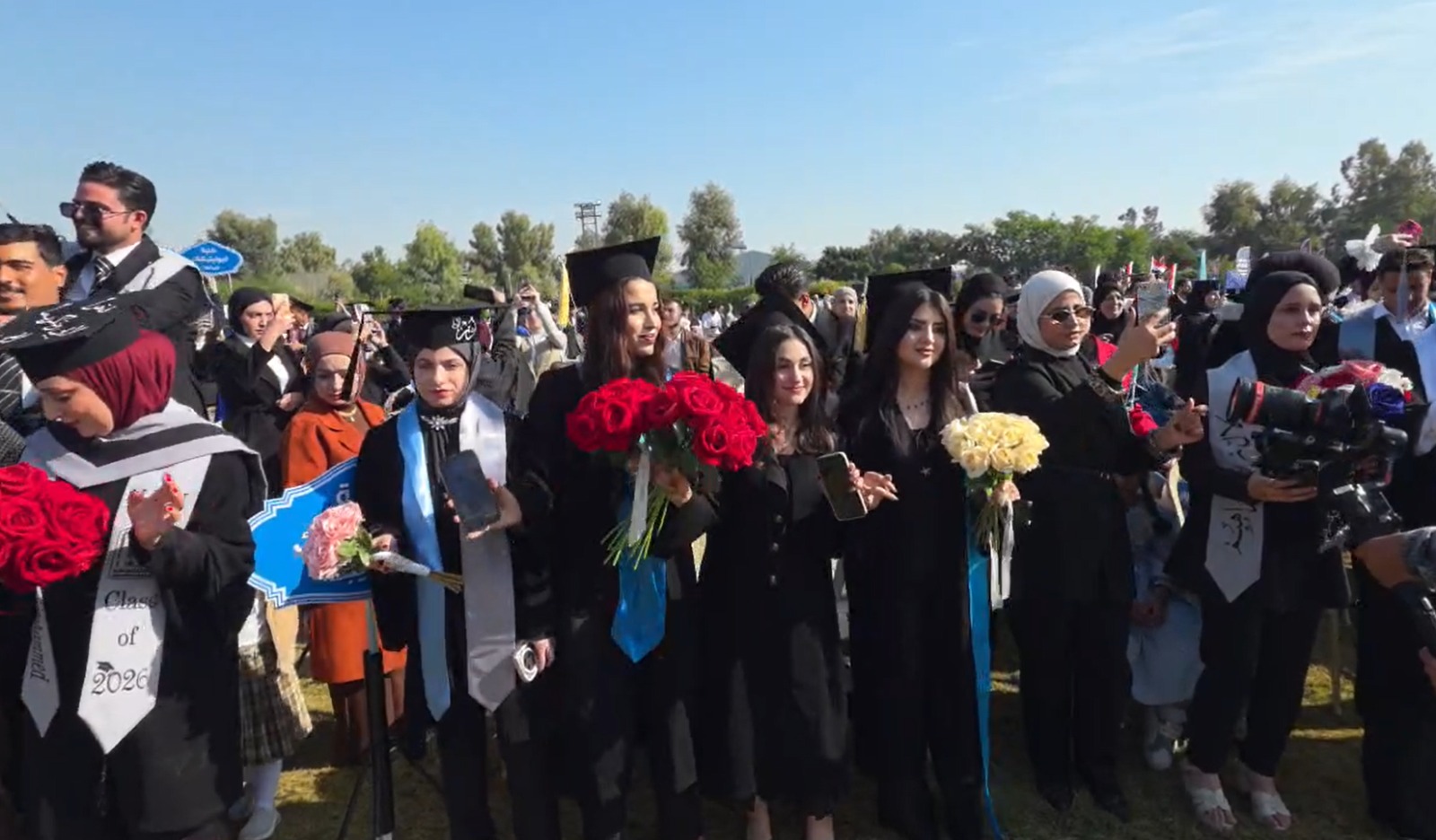
Nineveh, November 2026: Northern Technical University graduation ceremony. Ahmad Balla
Nur Saad Juburi, a medical laboratory graduate in Mosul, attended her graduation ceremony holding her child. Despite her family responsibilities, she managed to complete her studies. Now, she is awaiting employment and hopes medical graduates will be included in recruitment opportunities under the 2027 budget.
Juburi says securing employment would enable graduates to achieve economic independence and obtain their rights, particularly after overcoming numerous challenges throughout their years of education.
Like graduates of previous medical cohorts, many newly graduated students feel they are facing unequal employment opportunities. Raghad Ayad, from Salahaddin province, who studied eye examination, also called for equal treatment with previous graduates and opportunities for employment.
Public-sector employment, meanwhile, is not without difficulties. The financial crisis has resulted in prolonged salary delays, while promotions and salary increases have been suspended under government decisions. Nevertheless, public employees generally retain employment protections and benefits that are unavailable to many private-sector workers.
Iraq has witnessed a sharp increase in national poverty rate from 20% in 2018 up to 31.7% in 2021and the total number of poor to 11.4 million as a socio-economic impact of the Covid-19 pandemic, shows an assessment by the Iraqi Ministry of Planning with the support of UNICEF, World Bank, and Oxford Poverty and Human Development Initiative.
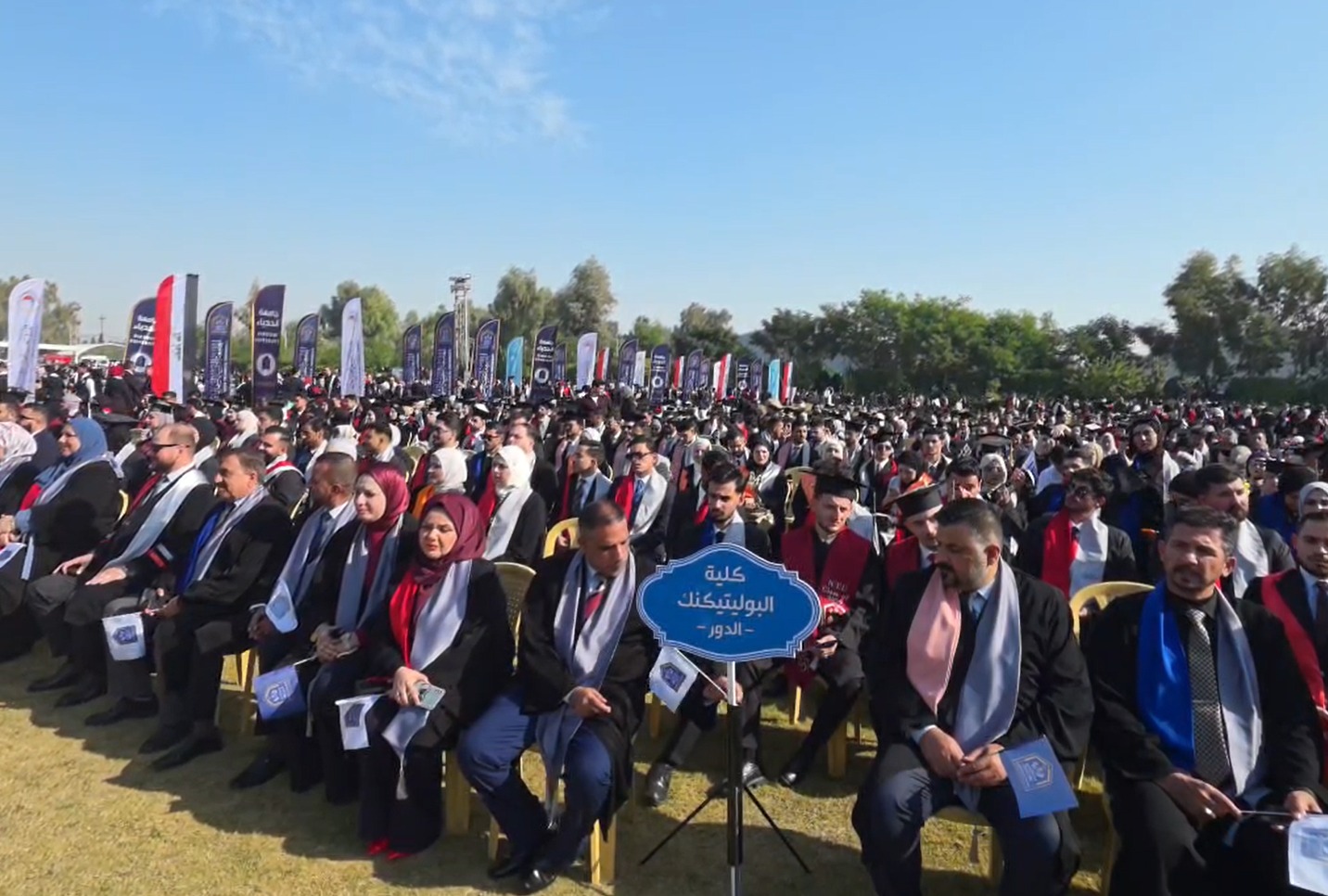
Nineveh, 2026: Northern Technical University Graduates More Than 11,000 Students This Year. Ahmad Balla
Government Turns Away from Public-Sector Hiring
Government and university officials acknowledge that continued reliance on public-sector employment is no longer sustainable and has become a financial burden. As a result, they are working to align university education with labor-market demands.
Jassim Fathi Ali, president of the Northern Technical University, told KirkukNow that the state can no longer bear the heavy burden of public-sector employment, adding that technical universities are working to align their curricula with the needs of the labor market.
He also said direct recruitment for medical departments had been discontinued due to the financial crisis and regional and international circumstances that have left the government unable to shoulder the costs. Under these conditions, graduates are increasingly expected to rely on themselves to find opportunities in the labor market.
The 11,500 graduates from universities across the three provinces this year are not limited to medical specialties; they also include graduates of engineering, agriculture, administration, law and other fields.
Iraq is preparing a new budget bill, which tens of thousands of university graduates hope will create employment opportunities or, at the very least, stimulate the labor market and restart stalled projects in the provinces, potentially generating new jobs.
Iraqi Finance Minister Faleh Sari said the government is moving toward formalizing the status of contract employees and those employed on permanent wages, as well as counting their previous years of service as part of the regularization process, following the approval of the 2027 budget.