
Dozens of senior officials in Kirkuk have been dismissed or removed from their positions following allegations of failure to curb oil smuggling, including the commander of the Kirkuk Joint Operations Command and the provincial police chief. Meanwhile, the Director General of the North Oil Company and both his deputies have been suspended.
The decisions were announced on Tuesday after the Prime Minister reviewed the findings of a special investigative committee established to examine oil-smuggling activities involving the state-owned North Oil Company.
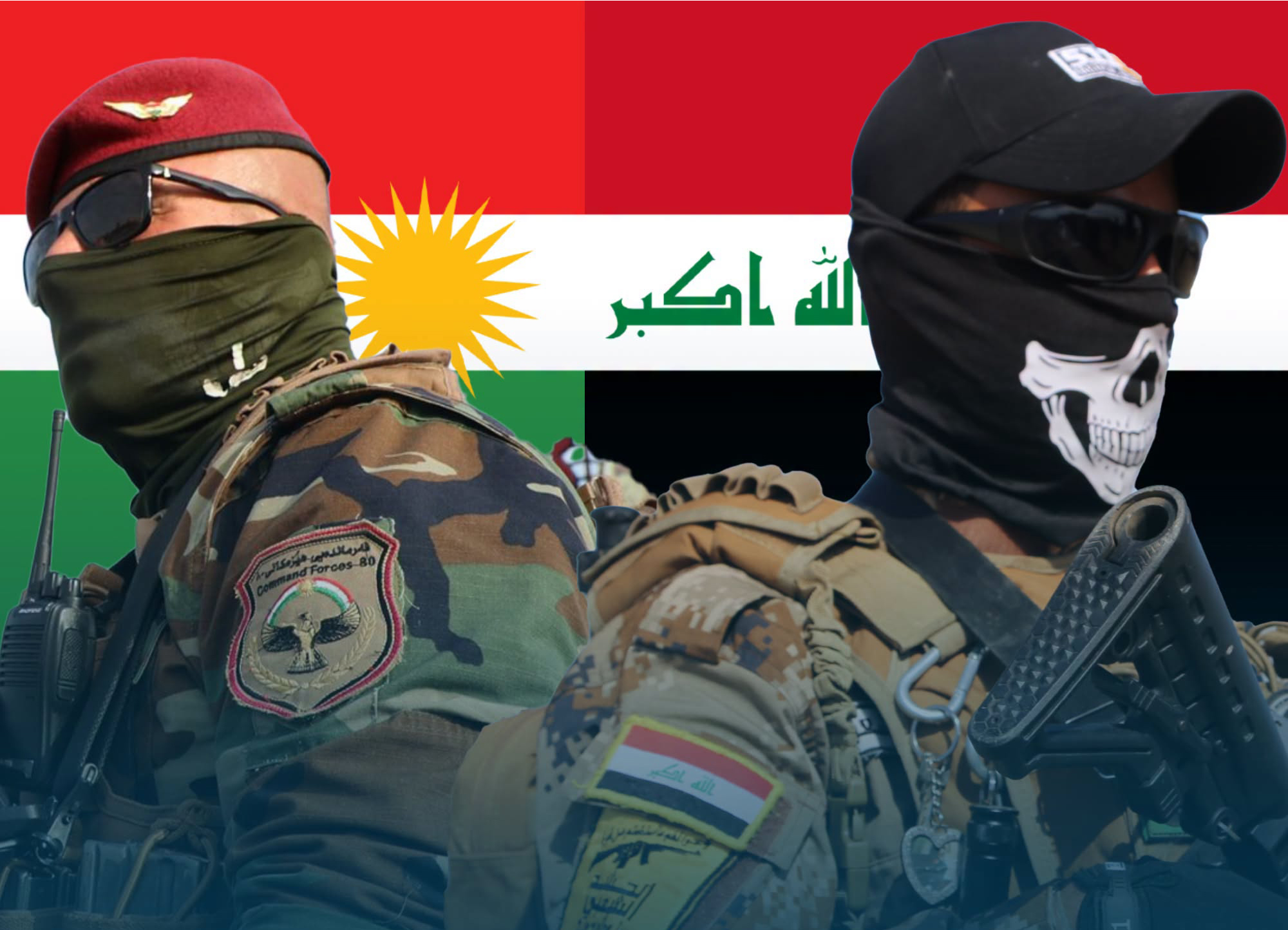
The measures also extend to the Kurdistan Region of Iraq KRI, where the Prime Minister has instructed the Border Ports Authority to assume responsibility for all border crossings. He has also directed the Ministry of Oil to take over the management of oil fields under its jurisdiction that are located within the administrative boundaries of Diyala, Kirkuk, Salah al-Din, and Nineveh provinces, but remain under the security control of the Kurdistan Regional Government (KRG).
The official statement said the decisions were taken in accordance with the principle that “national sovereignty is indivisible, and safeguarding Iraq’s wealth is a battle for survival.”
First: Administrative and Disciplinary Decisions
- The head of the Border Ports Authority has been removed from office.
- The commander of the Kirkuk Operations Command and the provincial police chief have been dismissed over their failure to address petroleum product smuggling.
- The commander of the First Energy Police Brigade, his deputy, the brigade’s intelligence director, and the head of its checkpoints division have been relieved of their duties.
- The directors of National Security and National Intelligence in Kirkuk have received formal reprimands.
- The Director General of the North Oil Company and his deputies have been suspended pending an investigation by the Federal Commission of Integrity. The former director general has also been referred for investigation.
- The head of the Inspection Department in Kirkuk, affiliated with the State Company for Oil Products Distribution, has been removed for failing to carry out his responsibilities.
- The Director General of Industrial Development and the Director General of the Mining Industries Company, both affiliated with the Ministry of Industry and Minerals, have been suspended pending investigations by the Federal Commission of Integrity.
Second: Administrative and Technical Recommendations
The relevant files and alleged violations are to be referred to the judiciary. The Federal Commission of Integrity will investigate the following matters and submit its findings to the judge of the Central Anti-Corruption Criminal Investigation Court:
- Review sales contracts for petroleum products between the North Oil Company (NOC) and Silver Axis (Al-Mahwar Al-Fiddi) Company, as well as other companies, and verify the quantities supplied.
- Examine the procedures for delivering crude oil from the Ministry of Oil to the Bazian and KAR refineries and ensure that the quantities delivered correspond with those received.
- Investigate North Oil Company officials and employees over alleged negligence, inadequate oversight, and possible irregularities.
- Examine industrial licenses issued by the Ministry of Industry and Minerals through its Directorate of Industrial Development, along with companies suspected of causing losses to public funds.
- Investigate payments made to civilian guards assigned to protect oil pipelines, amid allegations that the guards are not present at the North Oil Company sites they are supposed to protect.
- Investigate reported irregularities involving the absence of laboratory testing and determine the quantities of petroleum products exported from Iraq through border crossings in the Kurdistan Region.
Measures Concerning the Kurdistan Region and Border Crossings
- The Kurdistan Regional Government has been directed not to authorize the export of crude oil or petroleum products without approval from the federal Ministry of Oil, in order to avoid overlapping responsibilities.
- The Border Ports Authority is to take control of all border crossings within the Kurdistan Region.
- The Ministry of Oil has been instructed to manage its oil fields located within the administrative boundaries of the provinces of Diyala, Kirkuk, Salah al-Din, and Nineveh that are currently under the security control of the KRG.
Security, Military and Border-Control Measures
- The Border Guard Command is to shut down all unofficial border crossings with neighboring countries, including those within the Kurdistan Region.
- The Ministry of Defense has been instructed to deploy the First and Second Joint Interest Brigades to close unauthorized routes connecting Diyala, Salah al-Din, Kirkuk, and Nineveh with the Kurdistan Region.
- The Ministry of Interior is to instruct the Energy Police Directorate to secure oil fields and monitor them through surveillance systems, including fields located within federal administrative boundaries but currently under KRG security control.
Technical, Regulatory and Engineering Measures
- Establish a clear framework governing the transportation of petroleum products between governorates and through border crossings, with all relevant authorities required to comply.
- Introduce modern technologies to protect and monitor oil pipelines and wells, including the development of a national digital system for tracking pipelines and detecting smuggling activities.
- Install electronic meters at all operational oil wells across Iraq under the supervision of the Ministry of Oil.
- The engineering unit affiliated with the Prime Minister’s Office is to prepare designated facilities at checkpoints leading into Sulaymaniyah, Erbil, and Dohuk. These facilities will accommodate personnel from the Ministry of Oil, Energy Police, and National Security Service. Laboratories will also be established at the checkpoints to inspect petroleum products transported into the governorates.
- The Ministry of Industry and Minerals has been directed to relocate all oxidized asphalt and naphtha processing facilities situated in Diyala, Salah al-Din, Kirkuk, and Nineveh, outside the federal government’s security control, within six months.